Why Geometric Engraving is More Durable Than Stamping
Toby Dill • April 28, 2025
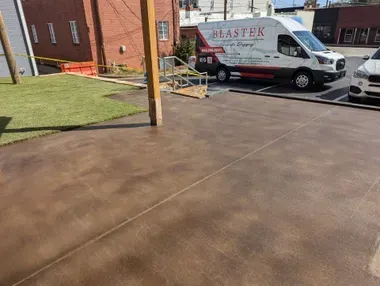
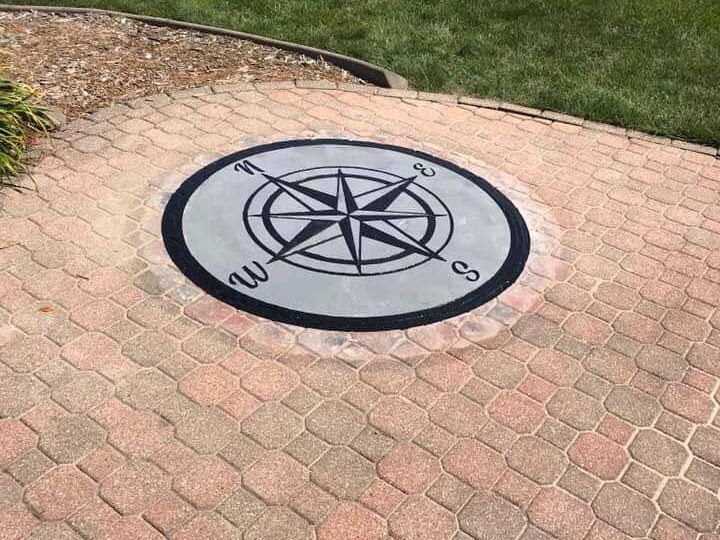
Stamped concrete compass design on a brick patio walkway installed by Blastek Concrete Designs in Boiling Springs, SC.

When it comes to decorative concrete, most people immediately think of stamping. It's been popular for years—and for good reason. Stamped concrete can mimic brick, slate, flagstone, and even wood. But there's another technique that's gaining traction for its long-term performance and precision: geometric engraving.


Homeowners and commercial property owners are beginning to ask a key question: “Which lasts longer—stamped or engraved concrete?” The answer points to a clear winner when durability is a top priority. Let’s break down the differences, benefits, and why geometric engraving might be the better investment for your next project.

What Is Geometric Engraving?

Geometric engraving is the process of cutting patterns directly into cured concrete. These patterns often follow clean, symmetrical lines—grids, diamonds, squares, borders, or even custom geometric designs. It’s sometimes called concrete scoring or saw-cutting, but the key difference is that engraving creates permanent, low-profile grooves that won’t chip or fade.


Unlike stamping, which relies on surface impressions and color overlays, engraving becomes part of the slab itself.

What Is Stamped Concrete?

Stamped concrete involves pressing a patterned mat into freshly poured concrete. The surface is then typically stained or colored to replicate the look of natural materials like stone, tile, or pavers.


While stamping is visually appealing and offers a wide range of textures, its decorative elements are surface-level—making it more vulnerable to wear over time.

Key Differences: Engraving vs. Stamping

Feature Geometric Engraving Stamped Concrete
Applied When? After concrete is cured While concrete is wet
Pattern Type Clean, linear, or abstract Stone, tile, wood mimics
Durability Extremely high Moderate (surface wear over time)
Risk of Chipping/Flaking Very low Moderate to high
Maintenance Required Minimal Sealer and touch-up often needed
Long-Term Appearance Holds shape and design Can fade or flatten with wear
Customization Precision cutting Textured stamps and colors

Why Geometric Engraving Is More Durable

1. It's Cut Into the Slab

Engraving doesn’t rely on surface impressions. The lines are etched directly into the concrete, meaning the design won’t wear away with foot traffic or weather exposure. Stamped surfaces, by contrast, can lose definition over time—especially in high-use areas like patios, driveways, or commercial walkways.


2. It Doesn’t Rely on Color Layers

Stamped concrete typically includes colored releases or surface stains. These can fade, peel, or require reapplication after a few years. Geometric engraving relies on shape and contrast—not surface color—so the design remains sharp and visible without constant maintenance.

3. Better Resistance to Cracking and Chipping


Stamping creates surface texture that’s more vulnerable to freeze-thaw cycles, water intrusion, and spalling. Geometric engraving keeps the concrete surface intact, which improves its resistance to environmental stress.


4. Low Maintenance Over the Years

While stamped concrete often needs resealing every 2–3 years, engraved concrete may go 5–10 years with little more than occasional washing. That means less time and money spent on upkeep.

Where Geometric Engraving Shines

This method isn’t just about durability—it’s also about style. Homeowners and designers are using geometric engraving concrete to create minimalist, elegant designs that stand the test of time. Ideal locations include:


  • Modern patios and pool decks
  • Entryways and walkways
  • Outdoor kitchens
  • Commercial storefronts
  • Interior flooring in lofts or studios

The clean lines of geometric engraving work well with contemporary architecture, xeriscaping, and open concept designs.

Common Engraving Patterns

Some of the most requested engraving layouts include:


  • Grid or tile layouts – Simple and timeless
  • Diamond patterns – Adds visual movement without complexity
  • Borders or frames – Great for accenting patios or pathways
  • Herringbone or basket weave – Offers a detailed look without raised texture
  • Radial or circular cuts – Perfect for courtyards or centerpieces

Since engraving is precision-cut, it can be tailored to the exact dimensions of your slab without relying on molds or mats..

Can You Engrave Existing Concrete?

Yes—and that’s one of the biggest advantages. Unlike stamping, which must be done while concrete is wet, geometric engraving can be done on cured concrete, even years after the original pour.


That makes it a great option for:


  • Refreshing old patios without demolition
  • Adding style to plain walkways or slabs
  • Replacing worn-out stamped areas with something more permanent

In many cases, existing slabs can be cleaned, engraved, and sealed in just a few days—at a fraction of the cost of a full replacement.

Cost Comparison

While both stamped and engraved concrete have similar base costs, engraving typically comes out ahead long-term due to lower maintenance. Here’s a general comparison:

Service Avg. Cost per Sq. Ft.
Stamped Concrete $12 – $18
Geometric Engraving (on new slab) $10 – $15
Engraving on existing slab $8 – $12

Engraving avoids the need for color overlays, release agents, and high-gloss sealers—keeping both material and maintenance costs lower.

Final Thoughts: Why Choose Geometric Engraving?

If you’re looking for a decorative concrete solution that balances style and long-term durability, geometric engraving is the clear winner. It’s cleaner, more precise, and far more resistant to the elements than surface-level stamping. And with endless design options, it fits nearly any outdoor or indoor space.


When you want your project done right, with detail that lasts, turn to a team that understands both design and durability.


Blastek Concrete Designs specializes in precision geometric engraving concrete, delivering low-maintenance style that holds up for decades. Whether you’re upgrading a patio, resurfacing an entryway, or designing a modern backyard, our team ensures it’s done with care, creativity, and unmatched craftsmanship.


Ready to engrave your space with lasting beauty? Contact Blastek Concrete Designs today for a free consultation.
August 19, 2026
One of the most common questions we get from homeowners and business owners across Spartanburg, Boiling Springs, Inman, and the Upstate sounds simple but rarely has a simple answer: can this concrete be saved, or does it need to come out? The honest answer depends on what's actually wrong with the slab — and a lot of contractors won't tell you the full picture before they hand you a quote. Either they're in the business of replacement and have a reason to recommend it, or they specialize in overlays and coatings and have a reason to say the slab is salvageable. Neither incentive leads to a straight answer. Here's how we actually assess a slab at Blastek, and the decision tree that tells us whether resurfacing makes sense or whether we're going to recommend the client look at other options. What "Resurfacing" Actually Means Before the assessment framework makes sense, it helps to be clear about what resurfacing covers. When we talk about resurfacing at Blastek, we mean finishing, coating, or overlaying the existing concrete — and not installing new concrete. We don't pour new slabs. What we do is take existing concrete and improve what it looks like, how it performs, and how long it lasts. The systems we work with include: Grind and seal — grind the surface to remove damage and contamination, apply a protective sealer. Good for sound slabs with surface-level wear. Stain and seal — color plus sealer on a properly prepped surface. Adds aesthetic value to a structurally sound slab. Concrete overlays — a thin layer of polymer-modified concrete applied over the existing slab. Can cover significant surface damage, change the texture, and allow decorative finishes like flagstone or stamp patterns. Epoxy and coating systems — applied over a prepared slab to add protection, durability, and appearance. Each of these requires the underlying slab to meet a baseline condition. The question is always: does this slab meet that baseline? The Four Things We Look At 1. Structural Integrity This is the non-negotiable. A slab that's heaving, sinking, or actively moving due to soil failure, tree roots, or subsurface erosion cannot be resurfaced. Putting a coating or overlay on a moving slab means the finish will crack and fail as the slab continues to move — usually within a year. Signs of structural failure: significant vertical displacement between slab sections, sections that rock when walked on, active water intrusion from below, or cracking that's widening over time rather than holding stable. If the slab is structurally compromised, the only honest recommendation is to address the underlying cause — which typically means removal, subgrade repair, and new concrete from a general contractor. That's outside what we do, and we'll tell you that directly. 2. Crack Type and Pattern Not all cracks are equal, and crack pattern tells us a lot about what's happening underneath. Hairline cracks — `$normal shrinkage, stable, not a concern for most resurfacing systems Settled cracks with vertical displacement — one side is higher than the other. This means the slab has moved. May still be resurfaceable if movement has stopped, but needs assessment. Map or spider cracking — a web of fine surface cracks, often from ASR (alkali-silica reaction) or freeze-thaw cycles. Can be overlaid if the underlying structure is sound. Deep structural cracks — cracks that go through the full depth of the slab. A problem. Overlay materials can bridge surface cracks but can't hold together a slab that's fractured through. Active cracks — cracks that are moving, widening, or showing fresh concrete debris. Means the problem is ongoing. Resurfacing over an active crack will fail. Our concrete repair work addresses many crack situations before any overlay or coating goes down — but some crack conditions make resurfacing impractical regardless of prep work. 3. Surface Condition Surface damage — spalling, pitting, scaling, delamination of old coatings — is usually what homeowners and business owners are most concerned about. The good news is that surface damage is almost always addressable without full replacement. Grinding removes surface contamination and failed coatings. Overlays can fill and level pitting and spalling. The key is whether the damage is purely surface-level or whether it extends into the structural layer of the slab. Heavy spalling — where chunks of concrete are breaking away and exposing aggregate or rebar — can still be addressed with repair and overlay, but the economics change. At some threshold of surface damage, the cost of prep and repair approaches the cost of replacement, and replacement starts to make more sense. 4. Moisture and Drainage South Carolina's humidity and rainfall create moisture conditions that affect every resurfacing decision. Slabs with active moisture transmission from below — especially basement and below-grade slabs — need moisture mitigation before any coating or overlay goes down. Skip this step and the coating delaminates. Outdoor slabs with poor drainage that pool water against the slab edge or over the surface will continue to fail any finish system over time unless the drainage issue is fixed first. We flag this at the assessment stage because it's cheaper to address drainage before a resurfacing project than to redo the job because water failed it. Our concrete resurfacing assessments always include a moisture check — it's one of the first things we look at. When Resurfacing Makes Clear Sense Slab is structurally sound — no heaving, sinking, or active movement Cracking is stable, surface-level, or limited to hairlines Surface damage is cosmetic — staining, discoloration, minor spalling, old failed sealers Moisture levels are manageable or addressable with primer/mitigation The existing slab has good bones — thickness, aggregate, overall condition are solid In these cases, resurfacing costs a fraction of replacement, takes a fraction of the time, and often produces a better-looking result than new gray concrete. When to Seriously Consider Replacement Slab is heaving or actively moving due to subgrade failure Structural cracks are through-depth and active Rebar exposure and corrosion is widespread The slab is below minimum thickness for the load it needs to carry Drainage issues can't be resolved without full removal The cost of repair and prep approaches or exceeds the cost of new concrete We'll tell you when we think you're in replacement territory — even though it means we're not doing the job. That's a better outcome for everyone than installing a resurfacing system over a slab that isn't going to hold it. What This Assessment Looks Like in Practice For every resurfacing project across Spartanburg, Greer, Boiling Springs, Cowpens, and the Upstate, we walk the slab before we quote anything. We look at crack patterns, test for hollow spots with a chain drag or hammer tap, check for moisture, assess the surface condition, and talk through the drainage situation. That takes 20-30 minutes on most residential projects and a bit longer on commercial slabs. The assessment is free. And if what we find tells us the slab isn't a good resurfacing candidate, we'll say so — and point you toward who can help with the next step.  Get a Free Slab Assessment in Spartanburg Give Toby a call at (864) 266-8841 or reach out through our contact page . On-site assessments are free across Spartanburg, Boiling Springs, Greer, Inman, Cowpens, and the surrounding Upstate.
August 12, 2026
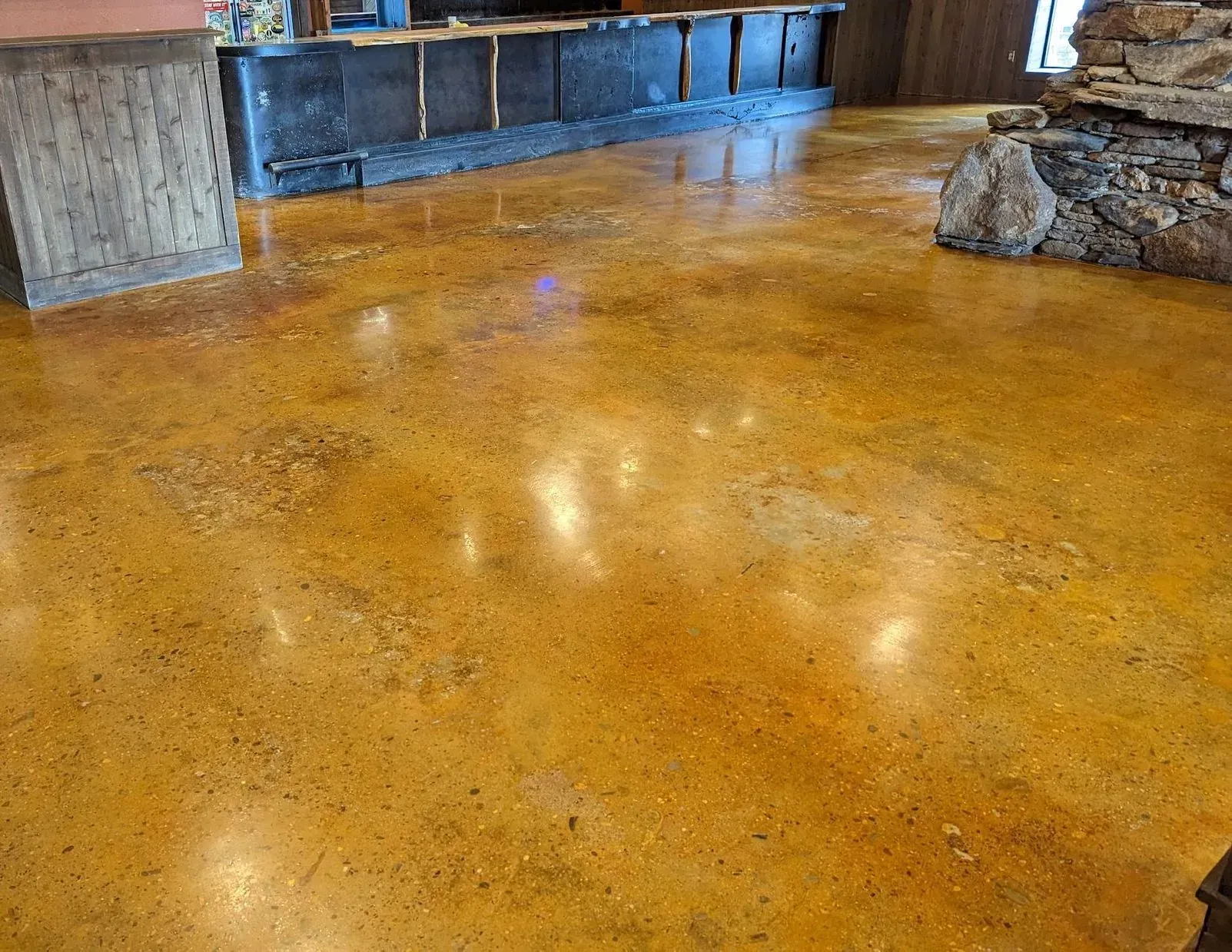
Concrete staining has become one of the most requested floor upgrades for commercial spaces across Spartanburg, Boiling Springs, Greer, and the surrounding Upstate. Retail stores, office buildings, restaurants, event venues, and medical practices are all moving away from VCT and tile toward stained concrete — and for good reason. Done right, it's durable, low-maintenance, and looks like it belongs in a space that was designed with intention. But commercial staining is different from residential staining in ways that matter. A homeowner staining a basement or patio has more margin for error. A business owner staining 3,000 square feet of retail floor in a space that opens to customers in two weeks does not. Here's what to understand before committing to commercial stained concrete in the Upstate. Why Commercial Floors Are a Different Problem Residential concrete staining is mostly about aesthetics and light use. Commercial staining has to account for a set of demands that residential floors rarely face: Foot traffic volume — a retail floor with hundreds of customers daily will wear the sealer differently than a home patio that sees foot traffic on weekends Rolling loads — carts, dollies, hand trucks, and office chairs on wheels all stress the sealer and surface in ways foot traffic doesn't Chemical exposure — cleaning crews in commercial spaces use stronger disinfectants and floor cleaners than most homeowners use, and the wrong sealer breaks down under repeated exposure Health and safety requirements — commercial floors may need to meet slip-resistance standards, especially in food service, medical, or public-access spaces Schedule pressure — most commercial projects have a hard reopening date, which means install timing, cure time, and reoccupancy windows have to be planned precisely A stained concrete contractor who works primarily on residential patios and garages may not have experience managing all five of those variables simultaneously. It's worth asking specifically about commercial project history before signing anything. What Concrete Staining Actually Does to a Commercial Floor Staining doesn't add a new surface on top of your floor — it changes the color of the existing concrete and seals it. Acid stain chemically reacts with the minerals in the slab to produce rich, mottled, earth-toned color that's unique to your specific concrete. Water-based stain bonds to the surface and gives more predictable, uniform color across a wider palette. Either way, the result is still concrete — just colored and sealed. There's no coating to peel, no grout lines to stain, no seams to lift. The sealer wears over time in high-traffic areas, but a commercial-grade sealer maintained with periodic re-application extends the floor's life significantly. Our concrete staining work in commercial spaces uses sealer systems matched to the traffic volume and cleaning program — not the same products we'd put on a residential patio. What the Slab Condition Actually Determines More than almost any other variable, the condition of the existing slab determines whether commercial staining is the right call and what it will cost. Staining works best on slabs that are structurally sound, relatively clean, and free of heavy contamination. Commercial slabs often have years of forklift traffic, oil drips, old adhesive from previous flooring, or VCT tile residue that has to be addressed before staining can begin. We grind the surface to open it up and remove contamination — the stain bonds to clean, properly prepared concrete, not to whatever was on top of it before. If the slab has significant cracking, spalling, or uneven areas, those can often be addressed with grinding and patching before staining — but they have to be disclosed upfront in the quote. A stained floor highlights everything in the slab, for better or worse. A mottled, character-rich acid stain can actually incorporate minor variation beautifully. Major crack repairs or patches will show through. Our concrete grinding and sealing process always comes before staining on any commercial project — it's what makes the color application uniform and the bond reliable. Choosing the Right Stain System for Your Space Acid Stain The classic commercial look. Rich, layered, earth-toned color that reads as sophisticated and intentional. No two floors look the same — the variation is part of the appeal. Most common in restaurants, event spaces, boutique retail, and professional offices that want a distinctive aesthetic. Water-Based Stain More color options, more predictable results. If you need a specific color that matches a brand palette — a corporate office with brand standards, a retail chain with a signature look — water-based stain gives you more control. The finish is slightly more uniform than acid stain, which some commercial clients prefer. Grind, Stain, and Seal vs. Stain and Seal Some commercial projects need a full grind before staining to remove old coatings or contamination and level the surface. Others — newer slabs or slabs in good condition — can be prepped with lighter work. The right approach depends entirely on what the slab looks like on the day we assess it, which is why the on-site walkthrough matters before any quote is finalized. What to Ask Before Signing a Commercial Staining Contract Have you done commercial staining projects at this scale before? — ask to see specific commercial references, not just residential work What sealer are you using, and is it rated for commercial traffic? — residential sealers don't hold up in commercial environments; commercial-grade systems cost more but perform differently What's the cure and reoccupancy timeline? — most stain-and-seal systems need 24-48 hours before foot traffic and 72+ hours before heavy loads; make sure the schedule accounts for this How will you handle existing contamination on the slab? — this tells you whether the contractor actually assessed the slab or is bidding blind What does the warranty cover, and does it exclude improper cleaning products? — cleaning with the wrong products voids most sealer warranties; you need to know what cleaning protocol to follow What's the maintenance program going forward? — commercial stained concrete needs periodic re-sealing (typically every 2-5 years depending on traffic); the quote should include what that looks like What Commercial Staining Costs in the Upstate For most commercial staining projects in Spartanburg and the surrounding area, expect pricing in the range of $3 to $7 per square foot for a quality stain-and-seal system, depending on slab condition, stain type, and the scope of prep required. Projects with significant contamination removal, crack repair, or multiple color applications run toward the higher end. A 2,000 sq ft retail floor typically falls between $6,000 and $14,000. Larger spaces scale down per square foot as the setup overhead spreads further. How Blastek Approaches Commercial Staining We've done commercial staining work in Spartanburg, Greer, Boiling Springs, Inman, Blacksburg, and across the Upstate — office buildings, restaurants, event spaces, and retail floors. Every commercial project starts with a slab assessment before we quote anything. We look at the existing condition, identify contamination, and specify the right system for the traffic and cleaning program the space will actually have. We don't give the same sealer to a restaurant floor and a professional office — the environments are too different. As a father-and-son team with more than 15 years in the business, we've built most of our commercial work through referrals from clients who saw what we did somewhere else and called us. That reputation matters more to us than any single job. Get a Free Estimate for Your Spartanburg Commercial Floor Give Toby a call at (864) 266-8841 or reach out through our contact page . On-site assessments and estimates are free across Spartanburg, Greer, Boiling Springs, Inman, and the broader Upstate.
August 5, 2026
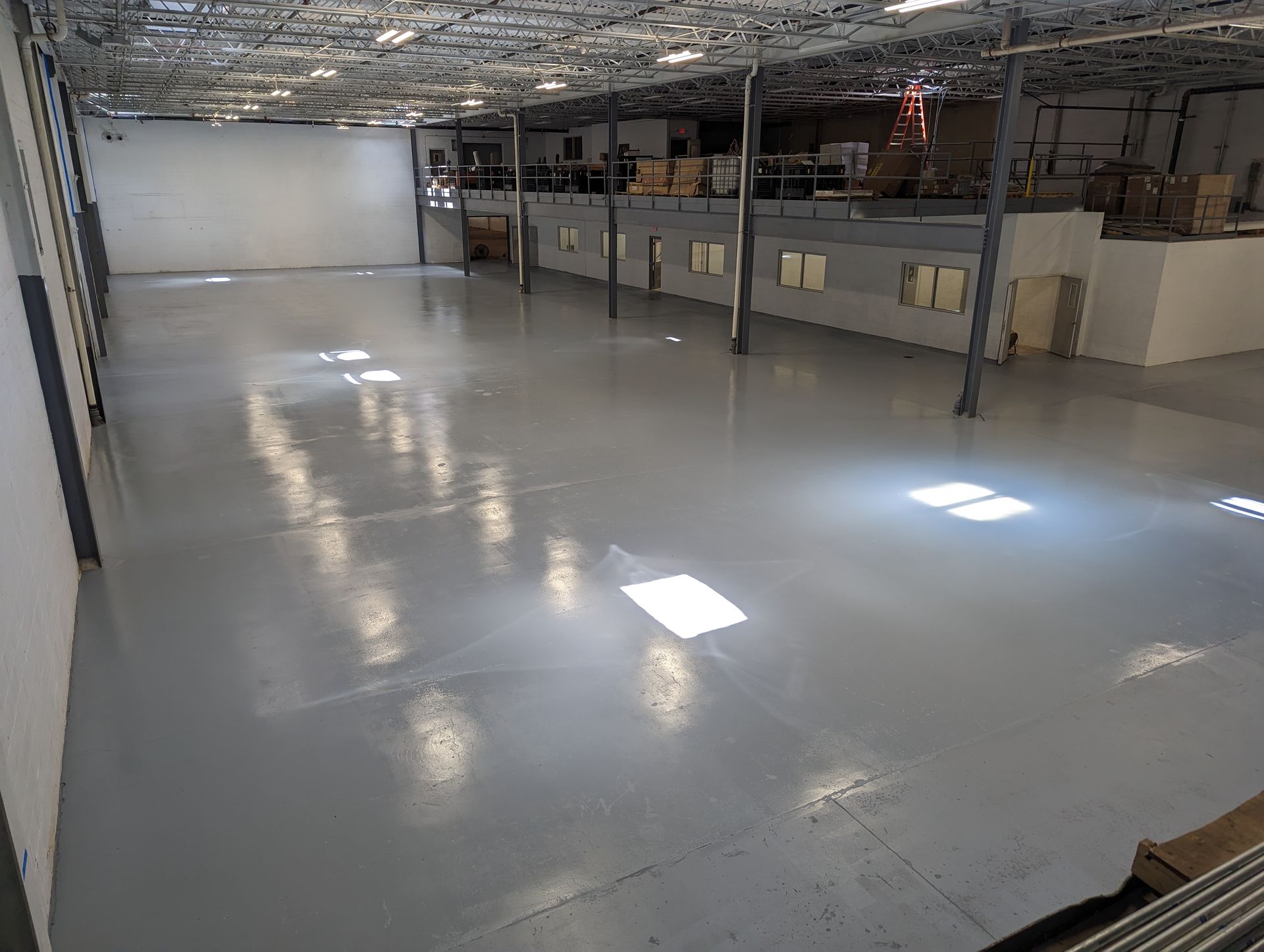
Warehouse & Industrial Floor Coatings in Spartanburg, SC 
July 29, 2026
Concrete Staining Color Options: Choosing the Right Look for Your Space
July 24, 2026
How Long Do Concrete Coatings Last in Upstate SC's Climate?
July 15, 2026
Grind and Seal vs. Full Resurfacing: Fixing Worn Concrete Without Replacing It
July 9, 2026
Healthcare & Medical Facility Floor Coatings in the Upstate
June 30, 2026
Pool Deck Resurfacing in South Carolina: Options, Costs & What to Expect
June 25, 2026
Epoxy Floor Coatings for Upstate SC Breweries & Restaurants
June 17, 2026
Polished Concrete vs. Epoxy Coating: Which Is Right for Your Spartanburg Garage?