Commercial Concrete Staining in Spartanburg, SC: What Business Owners Need to Know Before They Commit
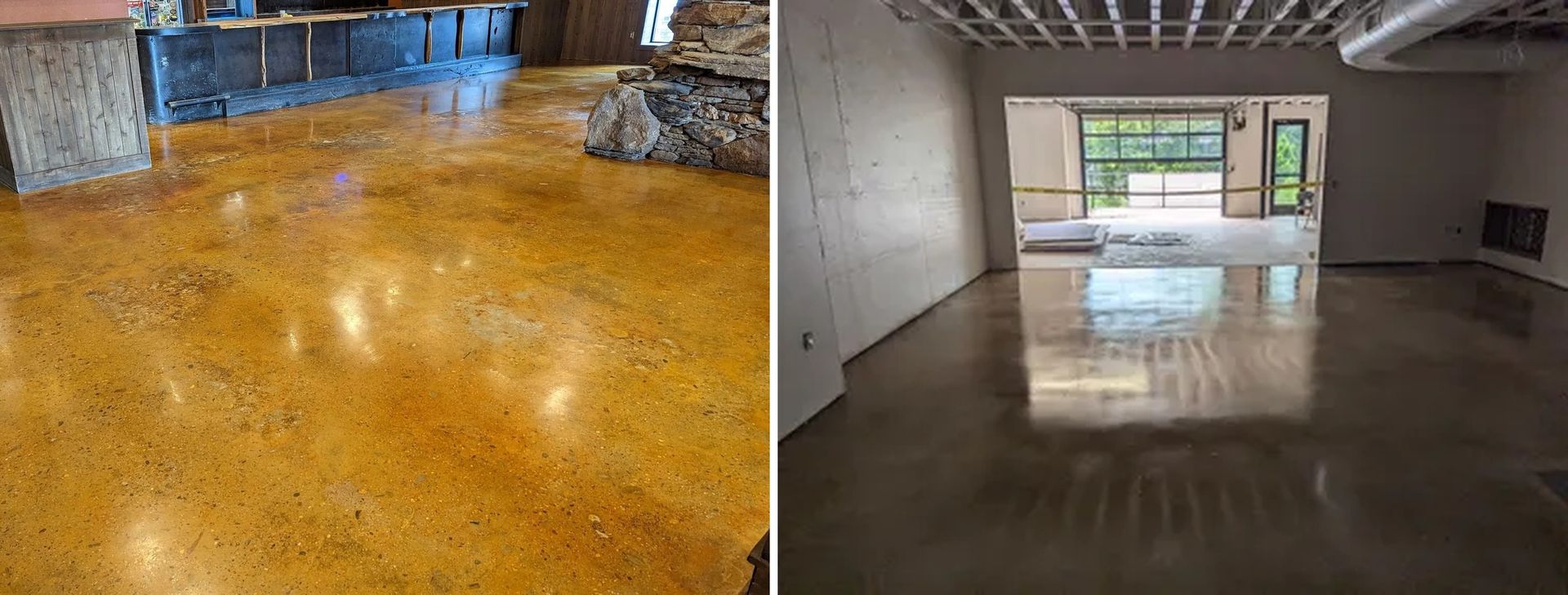
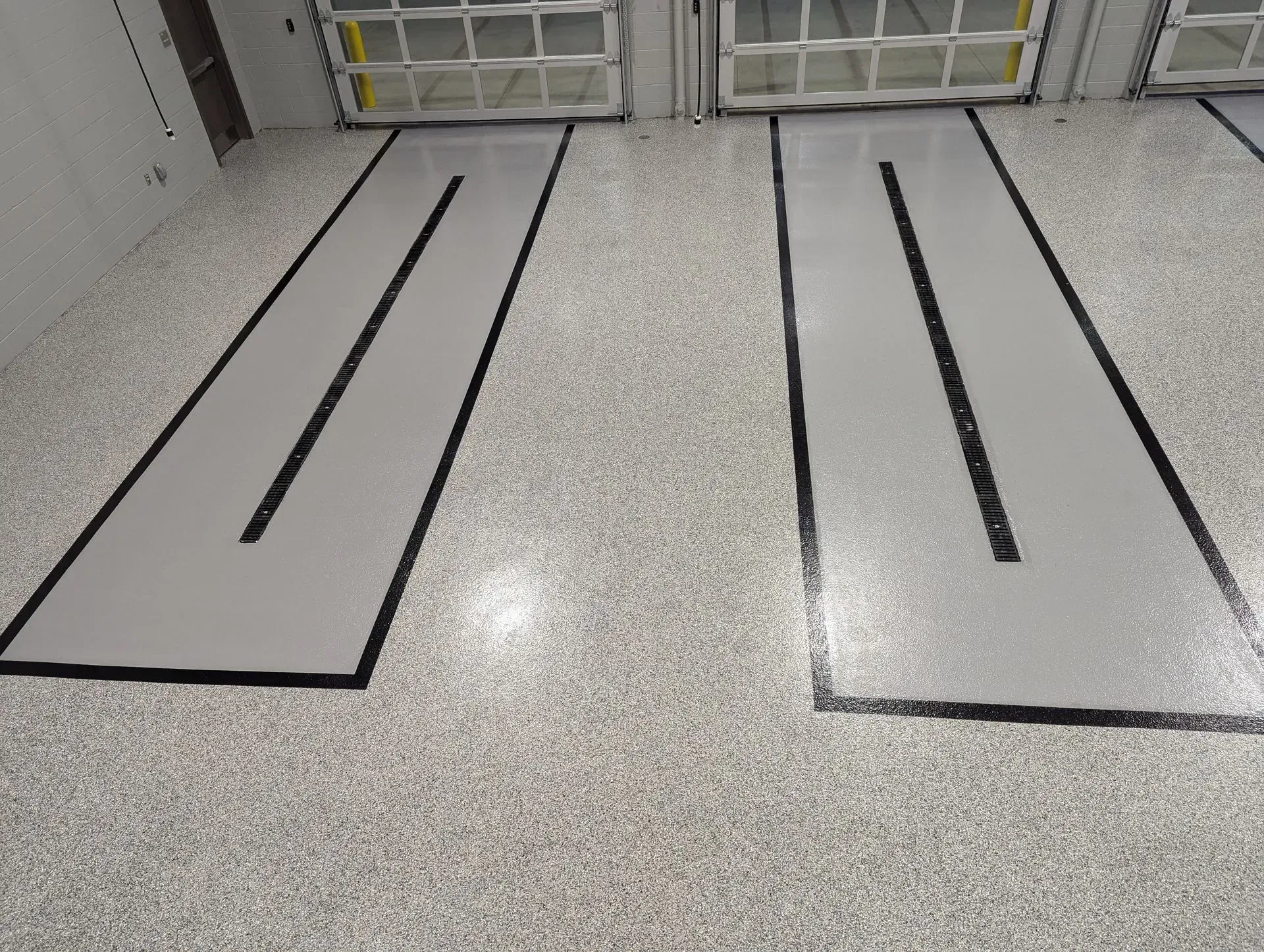
Concrete staining has become one of the most requested floor upgrades for commercial spaces across Spartanburg, Boiling Springs, Greer, and the surrounding Upstate. Retail stores, office buildings, restaurants, event venues, and medical practices are all moving away from VCT and tile toward stained concrete — and for good reason. Done right, it's durable, low-maintenance, and looks like it belongs in a space that was designed with intention.
But commercial staining is different from residential staining in ways that matter. A homeowner staining a basement or patio has more margin for error. A business owner staining 3,000 square feet of retail floor in a space that opens to customers in two weeks does not. Here's what to understand before committing to commercial stained concrete in the Upstate.
Why Commercial Floors Are a Different Problem
Residential concrete staining is mostly about aesthetics and light use. Commercial staining has to account for a set of demands that residential floors rarely face:
- Foot traffic volume — a retail floor with hundreds of customers daily will wear the sealer differently than a home patio that sees foot traffic on weekends
- Rolling loads — carts, dollies, hand trucks, and office chairs on wheels all stress the sealer and surface in ways foot traffic doesn't
- Chemical exposure — cleaning crews in commercial spaces use stronger disinfectants and floor cleaners than most homeowners use, and the wrong sealer breaks down under repeated exposure
- Health and safety requirements — commercial floors may need to meet slip-resistance standards, especially in food service, medical, or public-access spaces
- Schedule pressure — most commercial projects have a hard reopening date, which means install timing, cure time, and reoccupancy windows have to be planned precisely
A stained concrete contractor who works primarily on residential patios and garages may not have experience managing all five of those variables simultaneously. It's worth asking specifically about commercial project history before signing anything.
What Concrete Staining Actually Does to a Commercial Floor
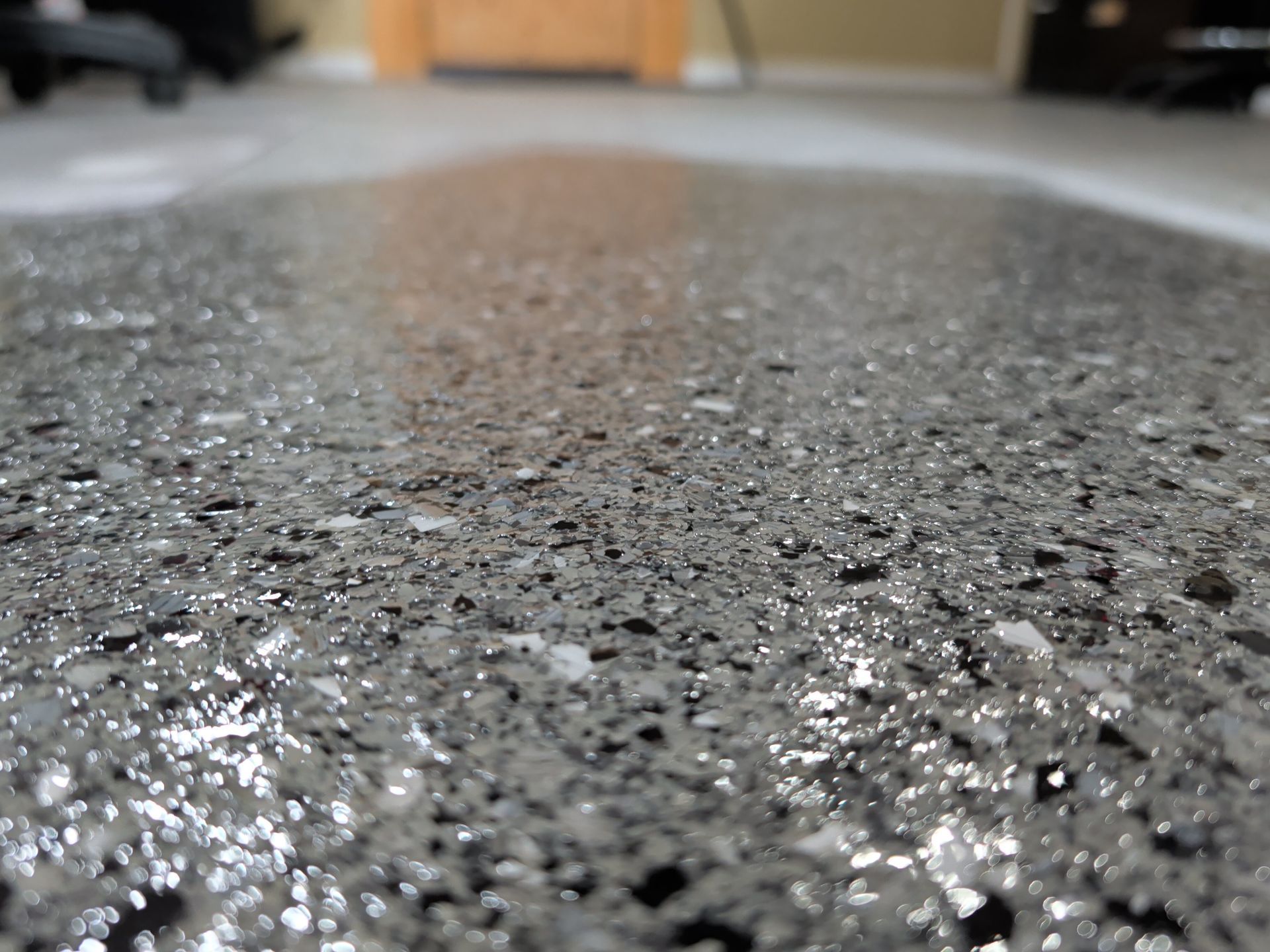
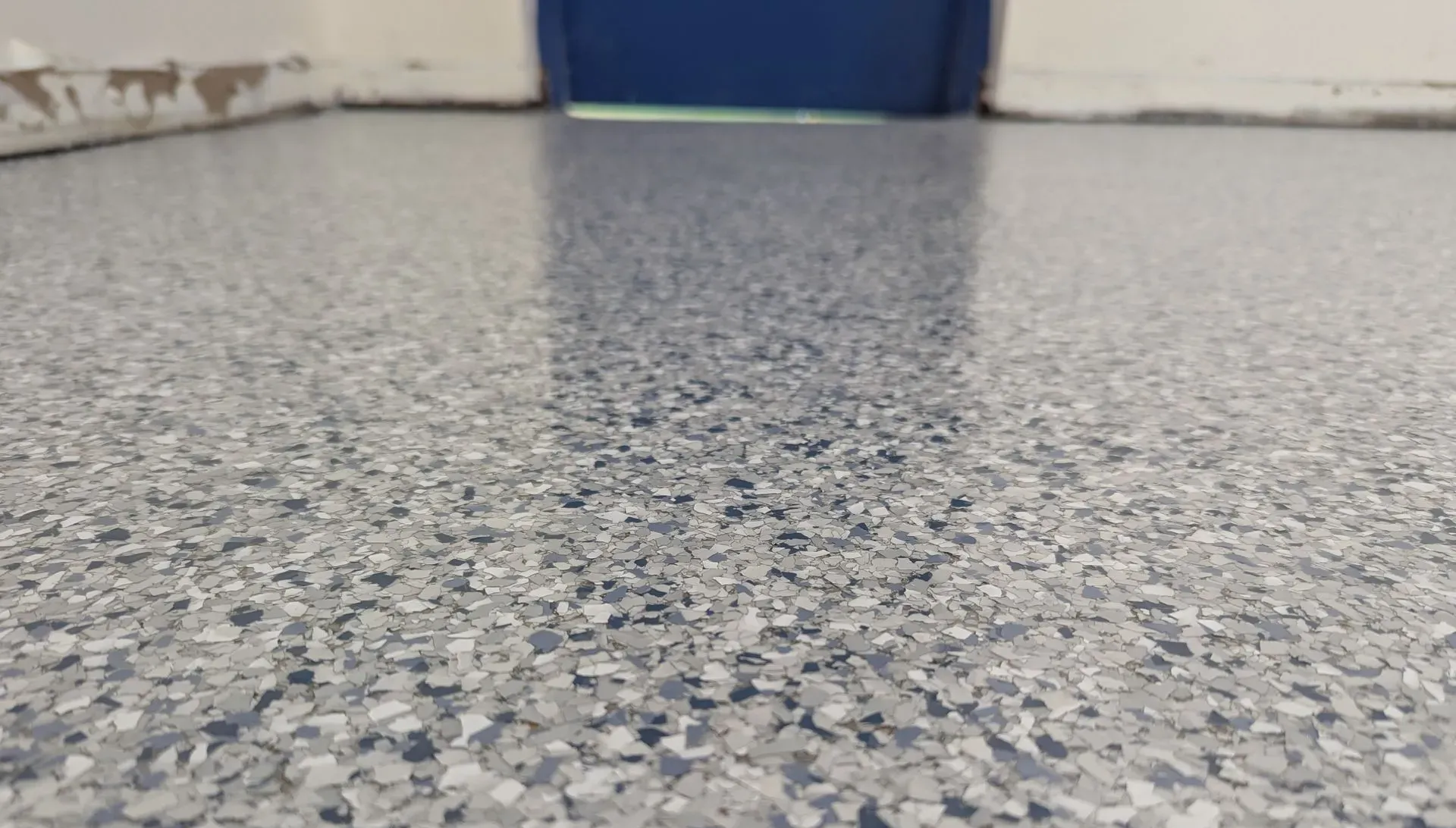
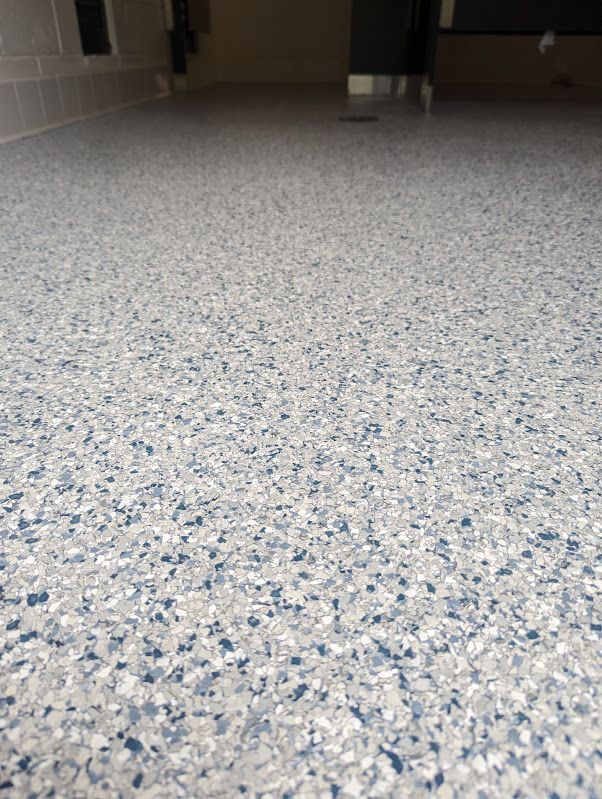
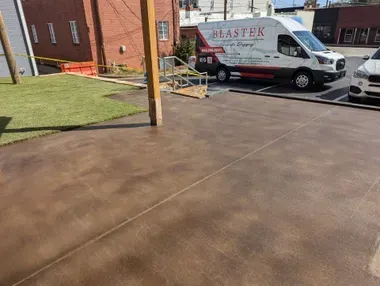
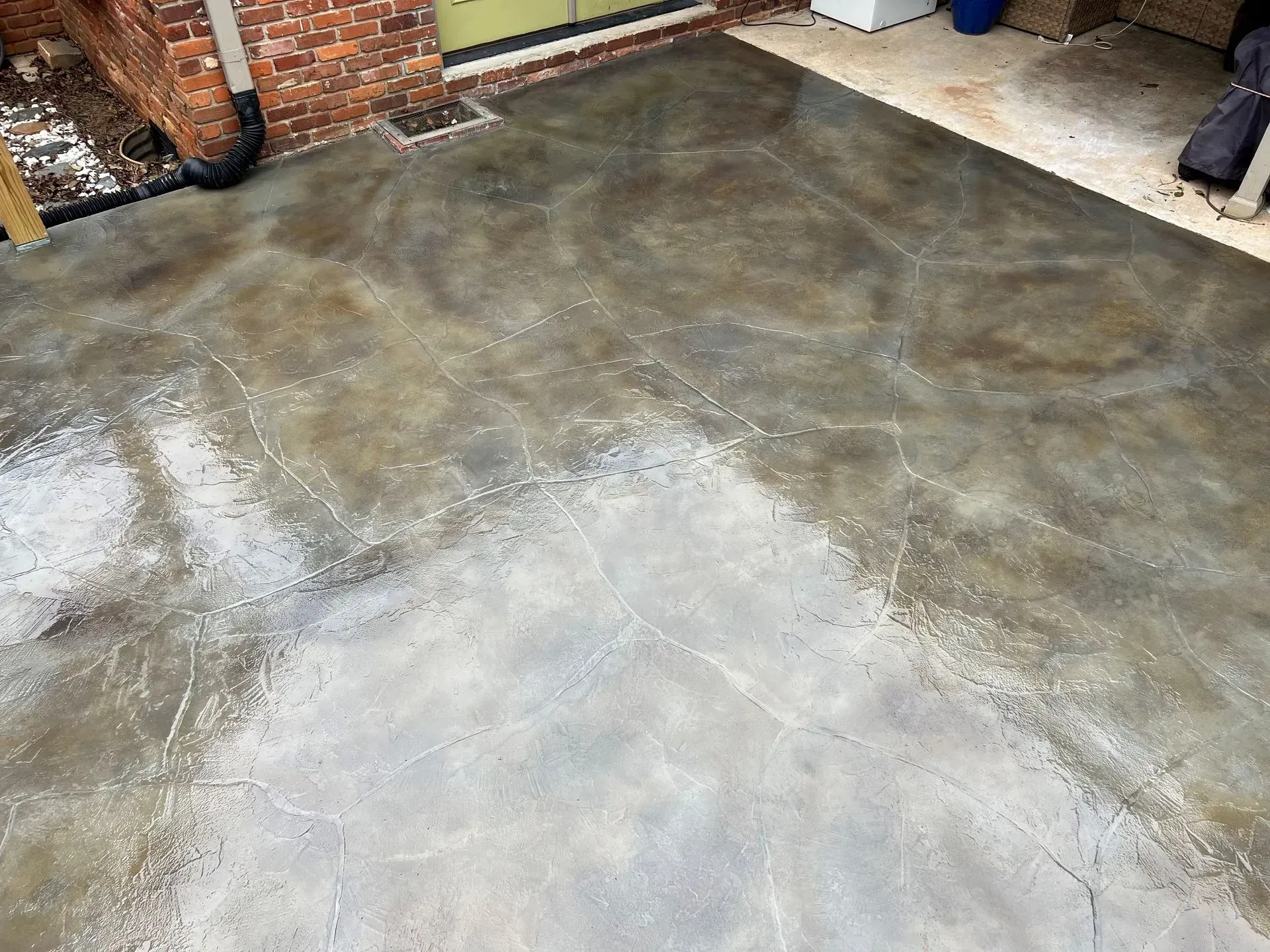
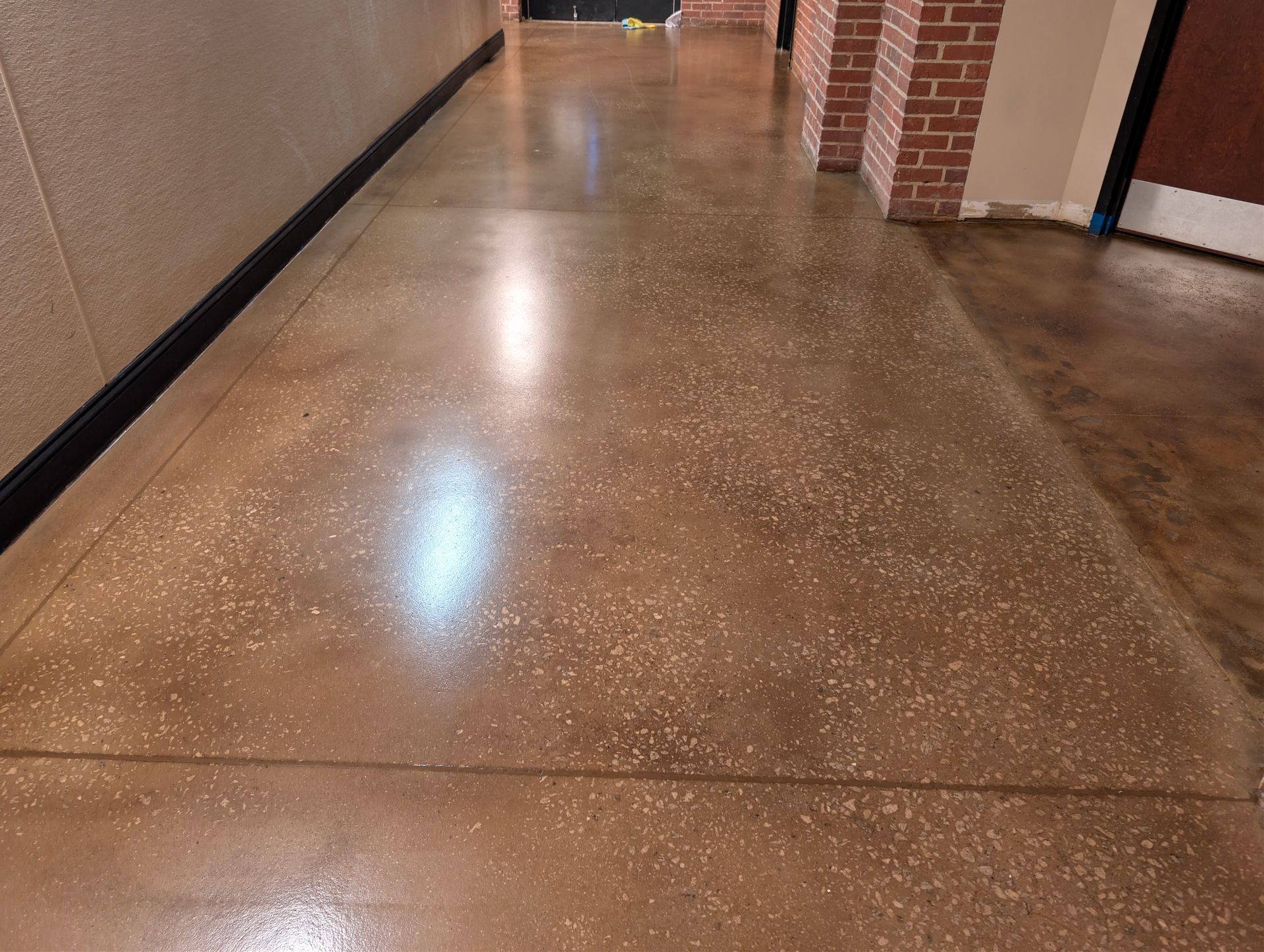
Staining doesn't add a new surface on top of your floor — it changes the color of the existing concrete and seals it. Acid stain chemically reacts with the minerals in the slab to produce rich, mottled, earth-toned color that's unique to your specific concrete. Water-based stain bonds to the surface and gives more predictable, uniform color across a wider palette.
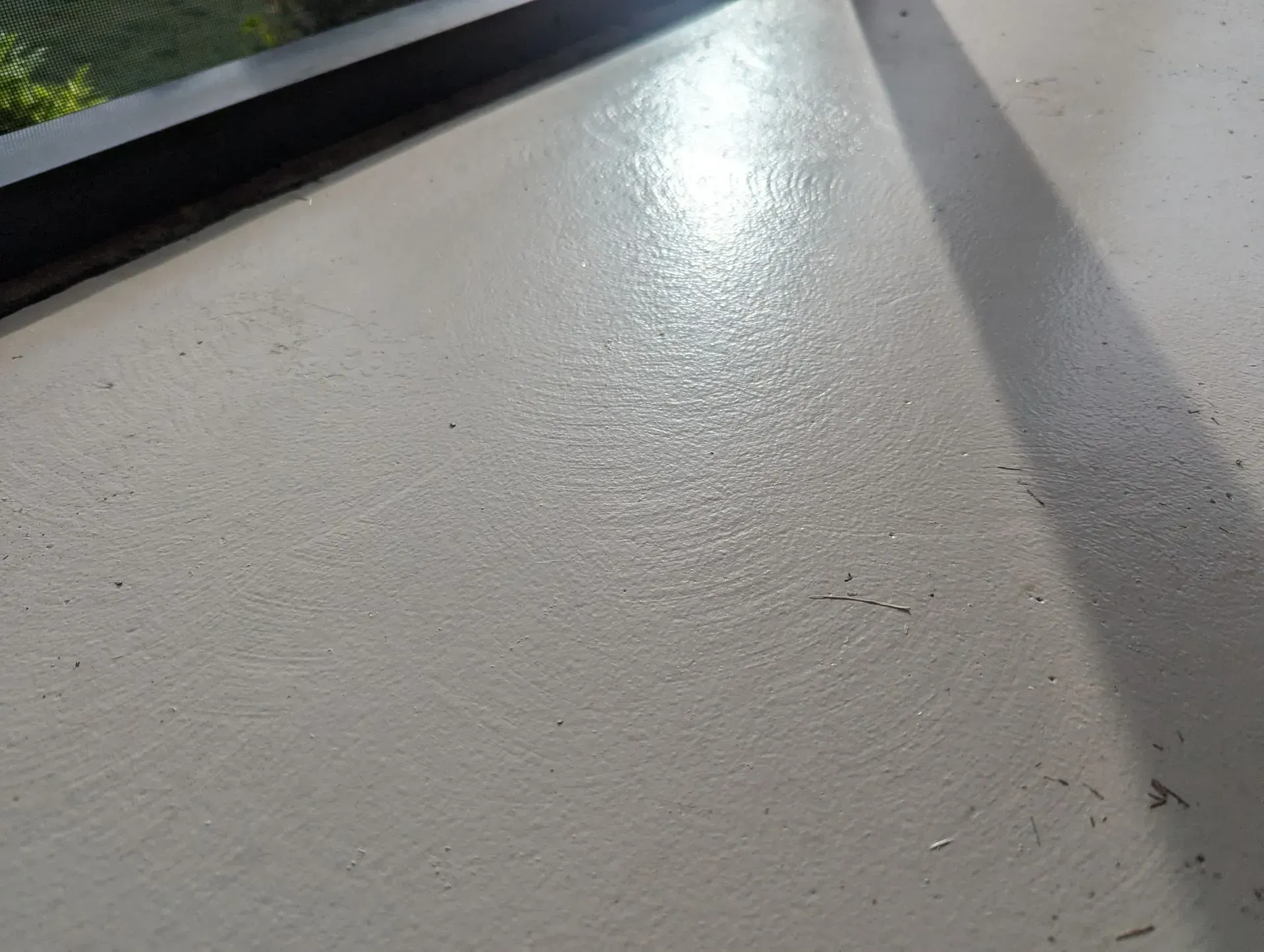
Either way, the result is still concrete — just colored and sealed. There's no coating to peel, no grout lines to stain, no seams to lift. The sealer wears over time in high-traffic areas, but a commercial-grade sealer maintained with periodic re-application extends the floor's life significantly.
Our concrete staining work in commercial spaces uses sealer systems matched to the traffic volume and cleaning program — not the same products we'd put on a residential patio.
What the Slab Condition Actually Determines
More than almost any other variable, the condition of the existing slab determines whether commercial staining is the right call and what it will cost.
Staining works best on slabs that are structurally sound, relatively clean, and free of heavy contamination. Commercial slabs often have years of forklift traffic, oil drips, old adhesive from previous flooring, or VCT tile residue that has to be addressed before staining can begin. We grind the surface to open it up and remove contamination — the stain bonds to clean, properly prepared concrete, not to whatever was on top of it before.
If the slab has significant cracking, spalling, or uneven areas, those can often be addressed with grinding and patching before staining — but they have to be disclosed upfront in the quote. A stained floor highlights everything in the slab, for better or worse. A mottled, character-rich acid stain can actually incorporate minor variation beautifully. Major crack repairs or patches will show through.
Our concrete grinding and sealing process always comes before staining on any commercial project — it's what makes the color application uniform and the bond reliable.
Choosing the Right Stain System for Your Space
Acid Stain
The classic commercial look. Rich, layered, earth-toned color that reads as sophisticated and intentional. No two floors look the same — the variation is part of the appeal. Most common in restaurants, event spaces, boutique retail, and professional offices that want a distinctive aesthetic.
Water-Based Stain
More color options, more predictable results. If you need a specific color that matches a brand palette — a corporate office with brand standards, a retail chain with a signature look — water-based stain gives you more control. The finish is slightly more uniform than acid stain, which some commercial clients prefer.
Grind, Stain, and Seal vs. Stain and Seal
Some commercial projects need a full grind before staining to remove old coatings or contamination and level the surface. Others — newer slabs or slabs in good condition — can be prepped with lighter work. The right approach depends entirely on what the slab looks like on the day we assess it, which is why the on-site walkthrough matters before any quote is finalized.
What to Ask Before Signing a Commercial Staining Contract
- Have you done commercial staining projects at this scale before? — ask to see specific commercial references, not just residential work
- What sealer are you using, and is it rated for commercial traffic? — residential sealers don't hold up in commercial environments; commercial-grade systems cost more but perform differently
- What's the cure and reoccupancy timeline? — most stain-and-seal systems need 24-48 hours before foot traffic and 72+ hours before heavy loads; make sure the schedule accounts for this
- How will you handle existing contamination on the slab? — this tells you whether the contractor actually assessed the slab or is bidding blind
- What does the warranty cover, and does it exclude improper cleaning products? — cleaning with the wrong products voids most sealer warranties; you need to know what cleaning protocol to follow
- What's the maintenance program going forward? — commercial stained concrete needs periodic re-sealing (typically every 2-5 years depending on traffic); the quote should include what that looks like
What Commercial Staining Costs in the Upstate
For most commercial staining projects in Spartanburg and the surrounding area, expect pricing in the range of $3 to $7 per square foot for a quality stain-and-seal system, depending on slab condition, stain type, and the scope of prep required. Projects with significant contamination removal, crack repair, or multiple color applications run toward the higher end.
A 2,000 sq ft retail floor typically falls between $6,000 and $14,000. Larger spaces scale down per square foot as the setup overhead spreads further.
How Blastek Approaches Commercial Staining
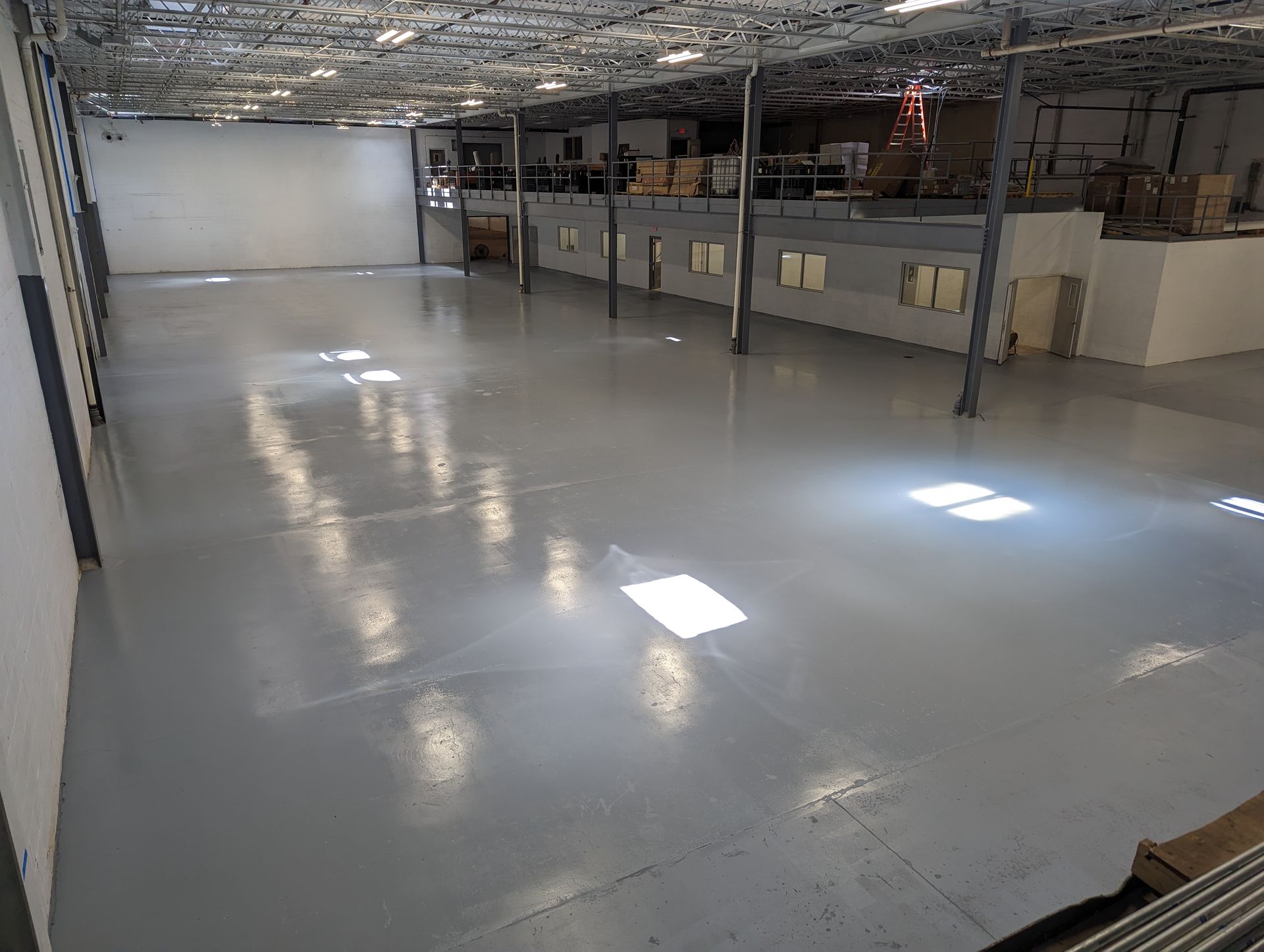
We've done commercial staining work in Spartanburg, Greer, Boiling Springs, Inman, Blacksburg, and across the Upstate — office buildings, restaurants, event spaces, and retail floors. Every commercial project starts with a slab assessment before we quote anything. We look at the existing condition, identify contamination, and specify the right system for the traffic and cleaning program the space will actually have. We don't give the same sealer to a restaurant floor and a professional office — the environments are too different.
As a father-and-son team with more than 15 years in the business, we've built most of our commercial work through referrals from clients who saw what we did somewhere else and called us. That reputation matters more to us than any single job.
Get a Free Estimate for Your Spartanburg Commercial Floor
Give Toby a call at
(864) 266-8841 or
reach out through our contact page. On-site assessments and estimates are free across Spartanburg, Greer, Boiling Springs, Inman, and the broader Upstate.