Warehouse & Industrial Floor Coatings in Spartanburg: A Buyer's Guide

August 5, 2026

Warehouse & Industrial Floor Coatings in Spartanburg, SC
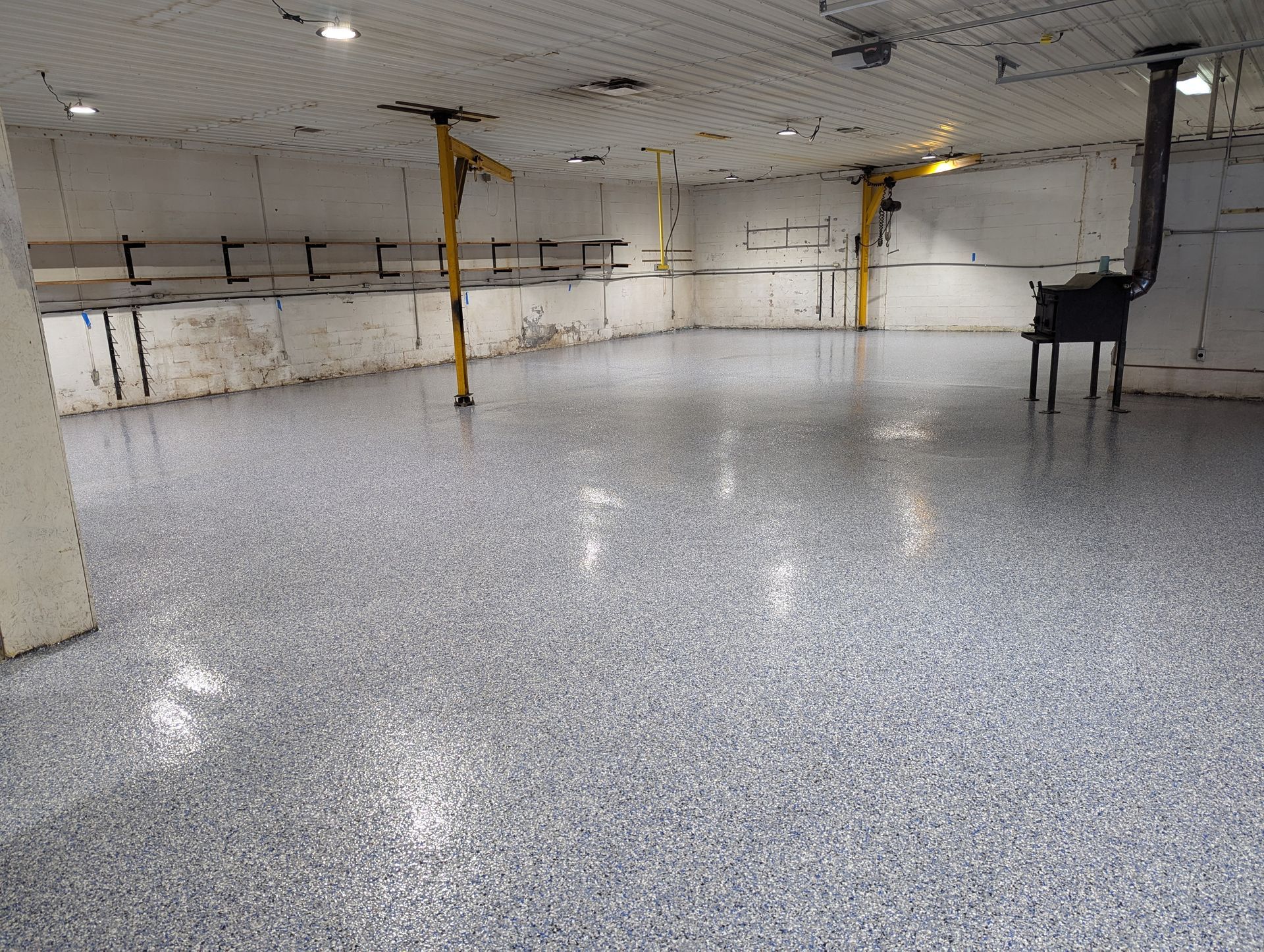
A warehouse or industrial floor takes a beating that no home floor ever sees: forklifts running all day, pallet jacks, dropped loads, chemical spills, and constant abrasion. When that floor starts dusting, cracking, or breaking down, it's not just an eyesore. It slows operations, creates safety hazards, and damages product and equipment. The right floor system is the difference between a surface you maintain once a decade and one you're patching every few months.


We're Blastek Concrete Designs, a father-and-son team out of Spartanburg with 15 years coating, polishing, and restoring existing concrete across the Upstate. We don't pour slabs; we make the industrial floor you already have tougher and longer-lasting. Here's what actually works for warehouse and industrial spaces, and how to choose the right system for how your facility runs.


What Industrial Floors Are Up Against

Before picking a system, it helps to be clear about the demands. An industrial floor in Spartanburg has to handle:

  • Heavy rolling and point loads from forklifts, pallet jacks, and racking.
  • Impact from dropped tools, loads, and equipment.
  • Chemical and oil exposure that stains and degrades unprotected concrete.
  • Abrasion from constant traffic that wears surfaces smooth or grinds them down.
  • Dusting from bare concrete, which contaminates product and fouls equipment.

A good system addresses the specific mix your facility deals with. A distribution center has different needs than a manufacturing floor or a chemical-handling area, and pretending one product fits all is how facilities end up redoing floors early.


Your Main Options for Industrial Floors

Heavy-Duty Epoxy Coatings

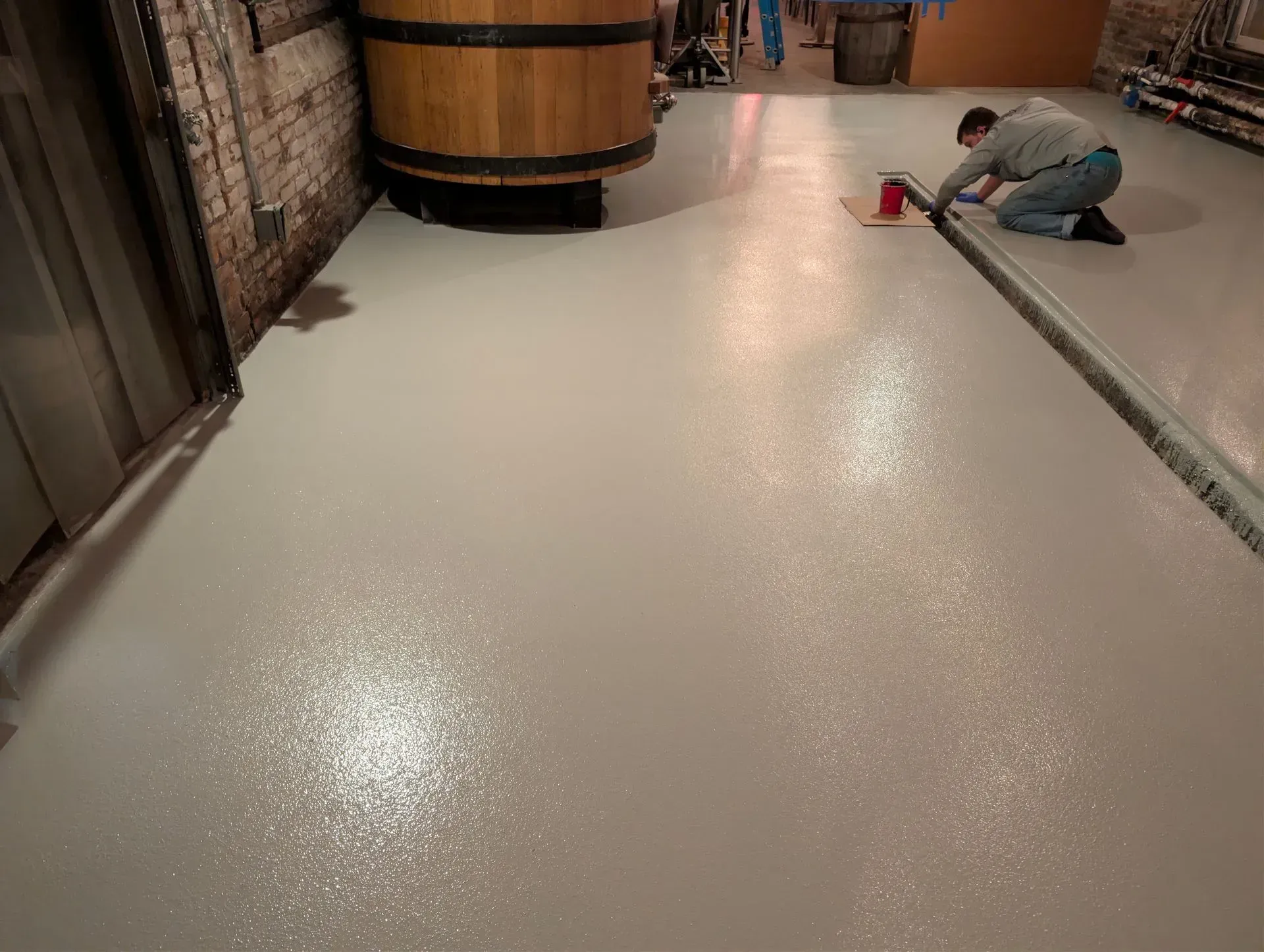
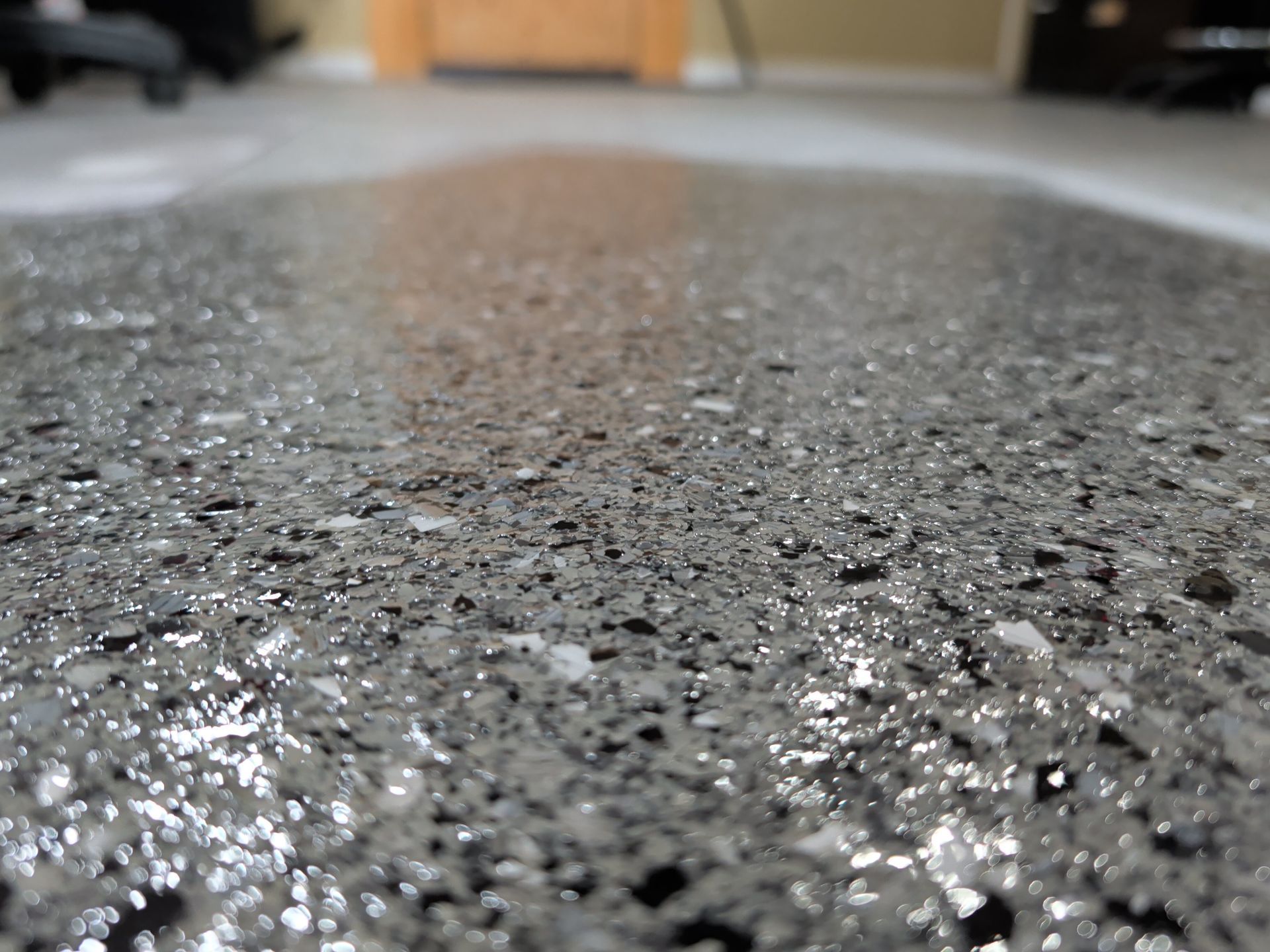
Industrial-grade epoxy creates a tough, seamless, chemical-resistant surface bonded to your slab. It stands up to impact, chemicals, and heavy traffic while staying easy to clean. For most warehouses and industrial facilities, a properly installed industrial epoxy is the workhorse choice.


Urethane and Specialty Systems

Where there's extra chemical exposure, thermal cycling, or heavy wet conditions, a urethane or specialty system adds resistance that standard epoxy can't match. These are the systems for the harshest corners of a facility.


Polished Concrete

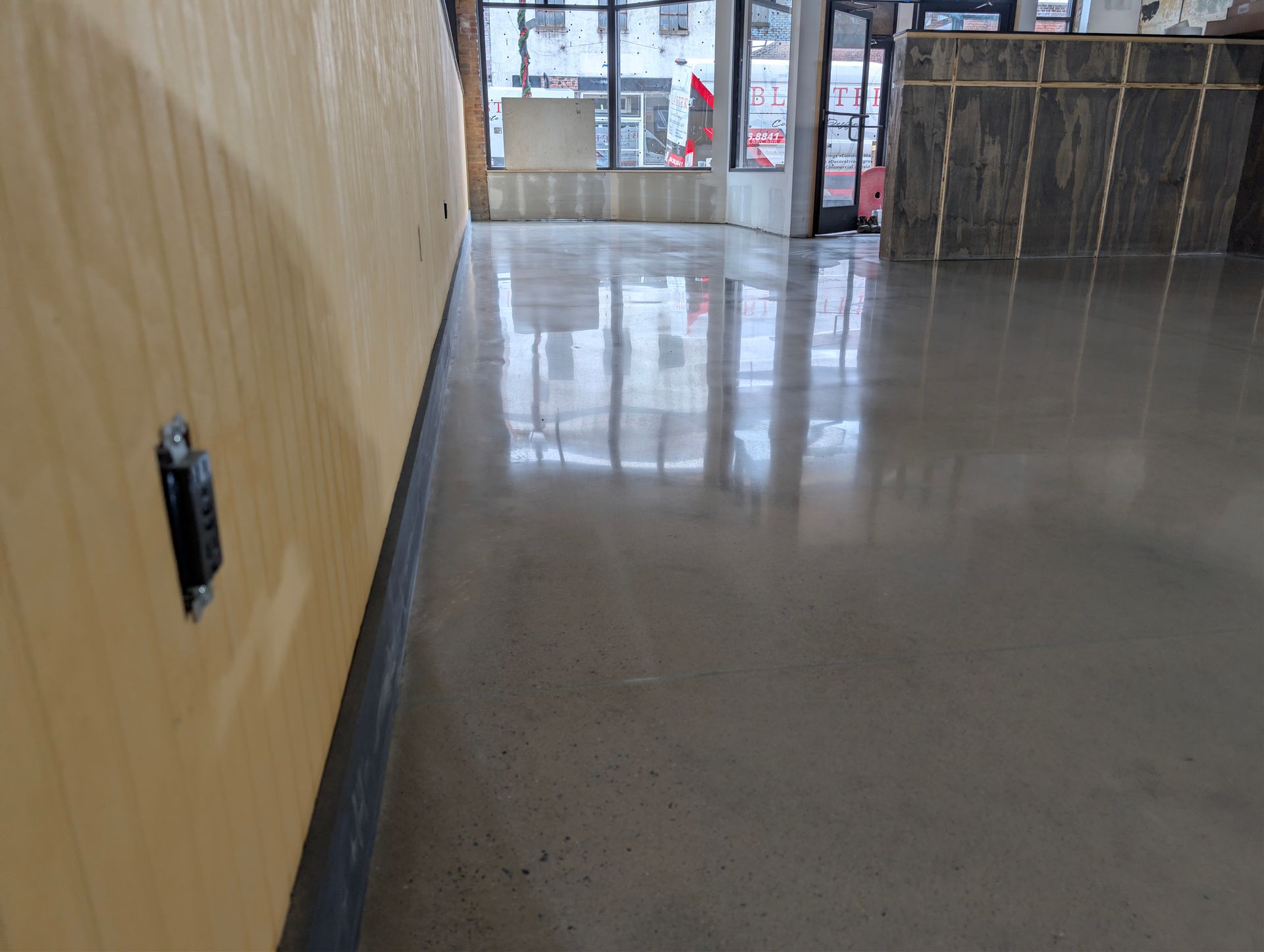
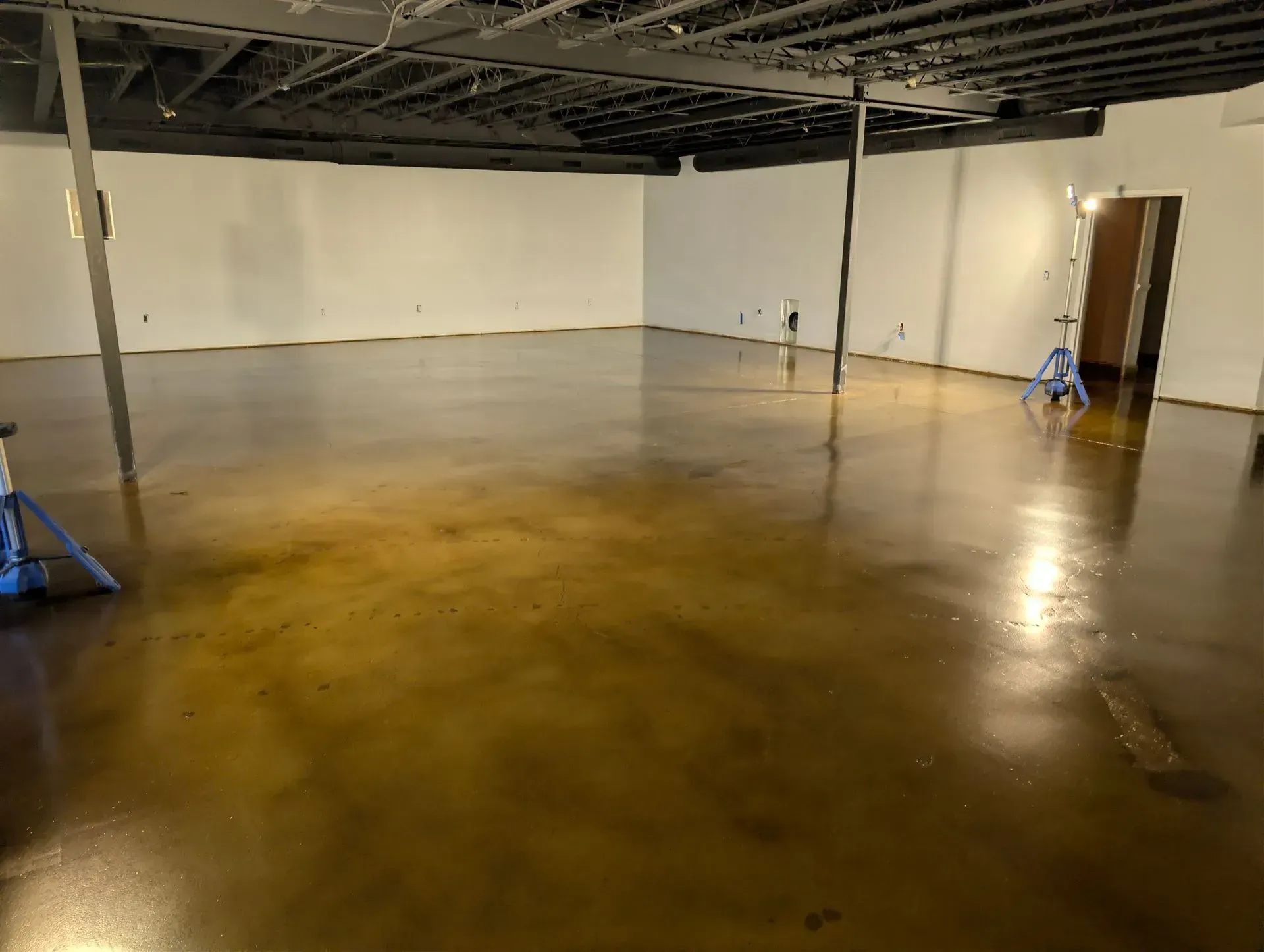
Not every industrial space needs a coating. Mechanically polished concrete produces an extremely hard, dustproof, low-maintenance surface straight from the existing slab, with no coating to peel or delaminate. It's a strong choice for warehouses, distribution floors, and showroom or sales areas where a clean, durable, reflective finish matters. We polished the floors at SRS Distribution's office, showroom, and counter-sales area in Spartanburg to an 800-grit finish, a pure mechanical polish with no coatings, after removing old carpet glue and repairing the divots, cracks, and spalls in the slab.


Industrial Sealers

For lower-demand areas or budget-conscious projects, a quality industrial sealer cuts dusting and adds protection at a lower cost than a full coating. We'll tell you when this is enough and when it isn't.


Why Prep Matters Even More on Industrial Floors

On a warehouse floor, surface prep isn't a step you can cut. The loads and abrasion are so heavy that any weakness in the bond shows up fast. That's why we mechanically prep every industrial floor, grinding or shot blasting to create the surface profile a coating needs to truly bond. We also repair the slab first: filling cracks, divots, and spalls, exactly as we did before polishing the SRS floor. Skipping that prep on an industrial slab guarantees early failure, no matter how good the product is.


Minimizing Downtime in a Working Facility

A warehouse can't shut down for a week, so we plan around your operations:

  • We phase the work by section or bay so the rest of the facility keeps running.
  • We schedule around your shifts, including nights and weekends where needed.
  • Our grinding runs with dust collection to keep the rest of your operation clean.
  • We give you realistic cure times up front so you can plan when each area goes back into service.

What we won't do is rush a cure to hit a deadline, because a coating put back into forklift service before it's ready will fail right where the traffic is heaviest.


What to Verify Before Hiring an Industrial Floor Contractor

Industrial flooring is a specialized job and a real investment. Before you sign, confirm:

  • Is the system matched to your actual conditions, traffic, chemicals, loads, and wet or thermal exposure?
  • Is the prep mechanical grinding or shot blasting, not just a chemical wash?
  • Will they repair the slab, cracks, divots, and spalls, before coating or polishing?
  • Can they phase the work around your shifts to keep you running?
  • What's the realistic cure time before forklift and heavy traffic resume?

How Blastek Approaches Industrial Floors Across the Upstate

Every industrial job starts with how your facility actually runs: we assess the slab and your traffic, loads, and chemical exposure, prep mechanically, repair the concrete, and install the right system, whether that's heavy-duty epoxy, a urethane system, polished concrete, or an industrial sealer. We do this for warehouses, distribution centers, and industrial facilities across Spartanburg, Greer, Anderson, Cowpens, Reidville, and the wider Upstate, and we'll recommend the system that fits your operation, not the most expensive one on the shelf.


Get a Free Estimate for Your Industrial Floor

If your warehouse or industrial floor is dusting, cracking, or breaking down under the load, let's get it sorted with a system built for how you actually use it. Give Toby and the team a call at (864) 266-8841 for a free on-site estimate, or reach us through our contact page. We'll assess your slab and your operation, recommend the right system, and give you a straight number with a phased timeline that keeps you running.
November 4, 2026
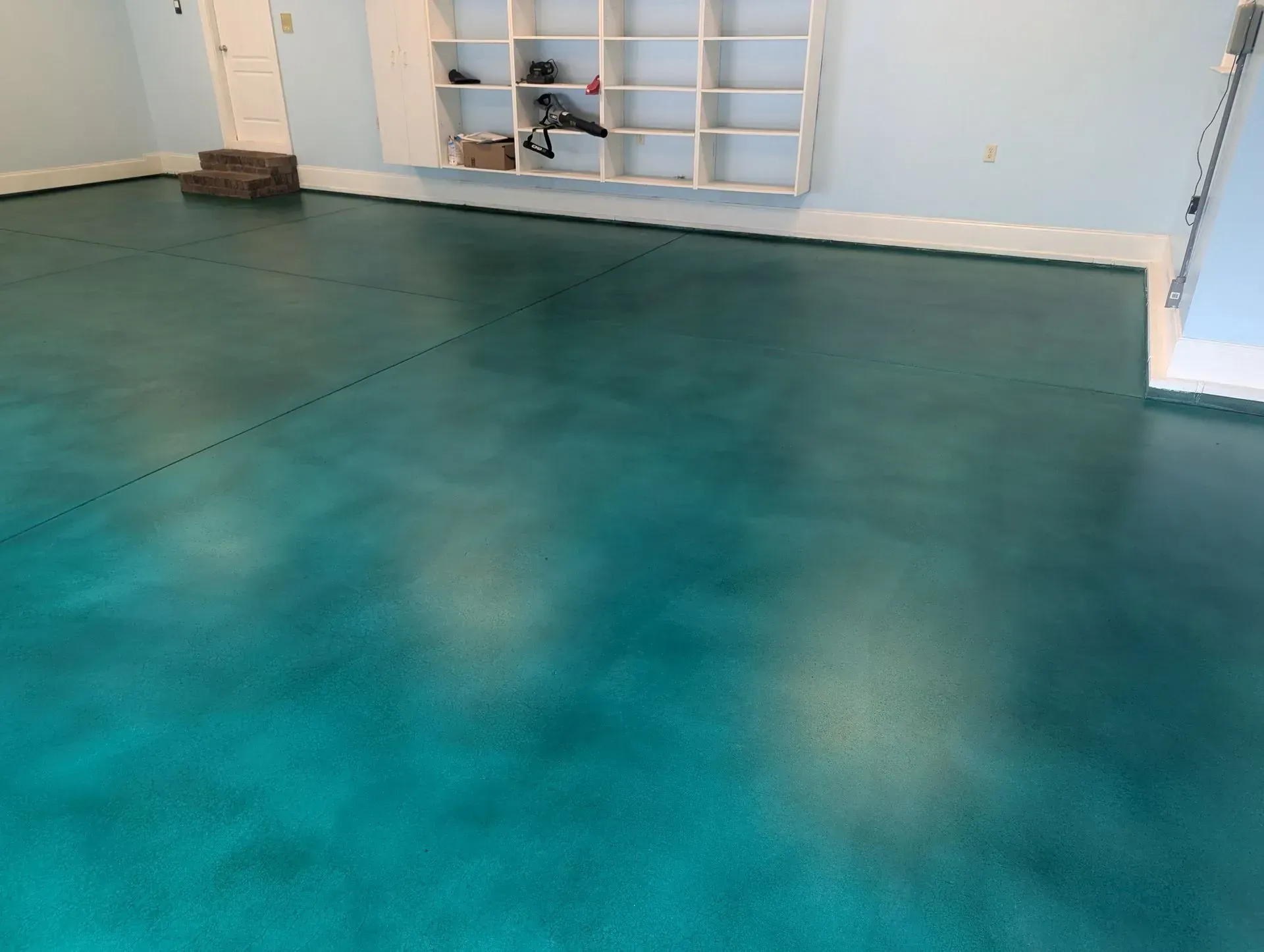
It's one of the first questions we get after every grind and seal project: how long is this actually going to last? In the Upstate, the honest answer depends heavily on where the concrete is — indoors or outdoors — and how much sun, moisture, and temperature swing it's exposed to over the year. Indoor Floors: The Best-Case Scenario A grind and seal finish on an interior floor — a basement, garage, or covered living space — is shielded from direct UV exposure and the freeze-thaw cycling that outdoor surfaces face. With routine cleaning and periodic sealant refresh, indoor grind and seal finishes commonly hold their look and protection for many years before needing significant attention. Outdoor Surfaces: Why They Wear Faster Patios, walkways, and pool decks face a tougher environment. South Carolina's intense summer UV exposure gradually breaks down sealant over time, and the state's freeze-thaw cycles in winter — moisture penetrating the surface, freezing, and expanding — put ongoing stress on any coating. Outdoor grind and seal finishes typically need sealant reapplication more frequently than indoor floors to keep up with this exposure. What Actually Determines Lifespan Beyond indoor versus outdoor exposure, three factors matter most: the quality of the sealant used, how well the surface was prepped before sealing, and how much traffic and weight the surface handles regularly. A properly ground and prepped surface holds a sealant coat significantly longer than one where prep was rushed, since the sealant needs a clean, properly profiled surface to bond to. Signs It's Time to Reseal A grind and seal finish that's starting to look dull rather than glossy, showing water absorbing into the surface instead of beading, or showing light traffic wear patterns are all signs the sealant layer has worn thin. Catching this before the underlying concrete starts staining again is a much smaller job than waiting until the surface looks visibly worn. Get a Maintenance Assessment Not sure if your grind and seal floor or patio needs attention? Blastek Concrete Designs offers free assessments across Spartanburg, Boiling Springs, and the Upstate. Call Toby at (864) 266-8841 or reach out through our contact page .
October 28, 2026
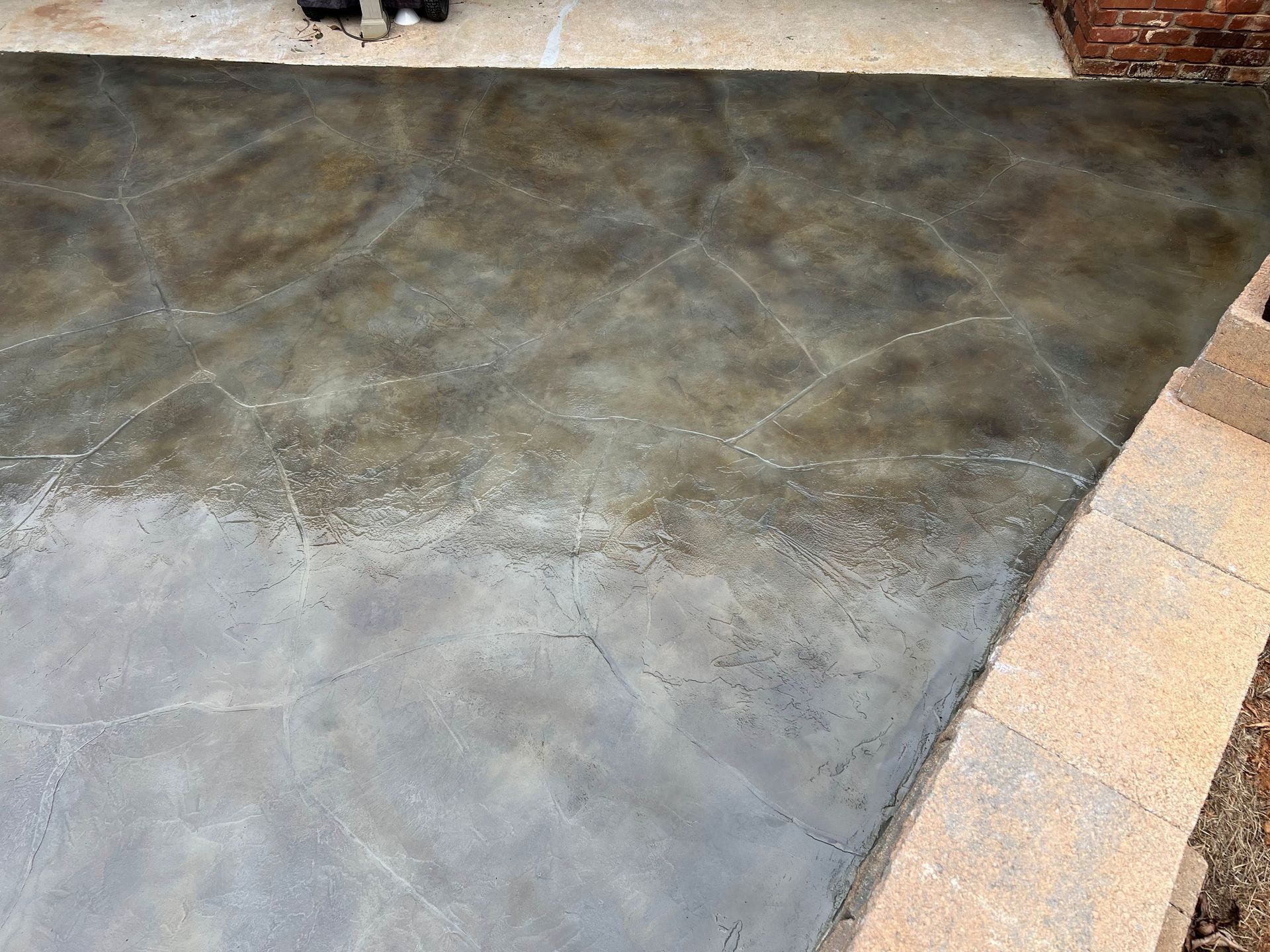
A dull, stained, or worn concrete floor is one of the most common calls we get in Spartanburg, and one of the most common assumptions homeowners make is that the only fix is ripping it out and starting over. In most cases, that's not true. Grind and seal is a process built specifically to take existing concrete and bring it back to a smooth, protected, better-looking surface without a full replacement. What the Process Actually Involves Our grind and seal process starts with specialized diamond grinding equipment that removes surface imperfections — stains, blemishes, unevenness, old failed coatings — down to a smooth, uniform surface. Depending on the depth of the grind, this can also expose the natural aggregate in the concrete for a more textured, decorative look. Once the surface is properly prepped, we apply a protective sealant that guards against future staining, moisture penetration, and everyday wear. Where This Works Best Grind and seal is a strong fit for patios, garage floors, basements, walkways, and interior floors that are structurally sound but cosmetically tired — surface staining, dullness, minor pitting, or an old coating that's starting to fail. It's not the right fix for a slab with structural cracking or active movement, since sealing over a moving slab just delays the same problem. Why It's More Affordable Than Replacement Because grind and seal works with the existing slab rather than removing and repouring, it costs a fraction of full replacement and takes a fraction of the time — typically finished in a day or two for most residential projects, compared to the demolition, curing, and finishing timeline a new pour requires. How Long It Lasts With proper sealant maintenance — reapplying every few years depending on traffic and exposure — a grind and seal finish can look good for many years. Indoor floors with lighter traffic tend to hold their finish longer than exterior patios exposed to South Carolina's sun, rain, and freeze-thaw cycles.  Get a Free Assessment If your concrete is looking dull, stained, or worn but you're not sure it needs full replacement, Blastek Concrete Designs offers free assessments across Spartanburg, Boiling Springs, and the Upstate. Call Toby at (864) 266-8841 or reach out through our contact page .
October 23, 2026
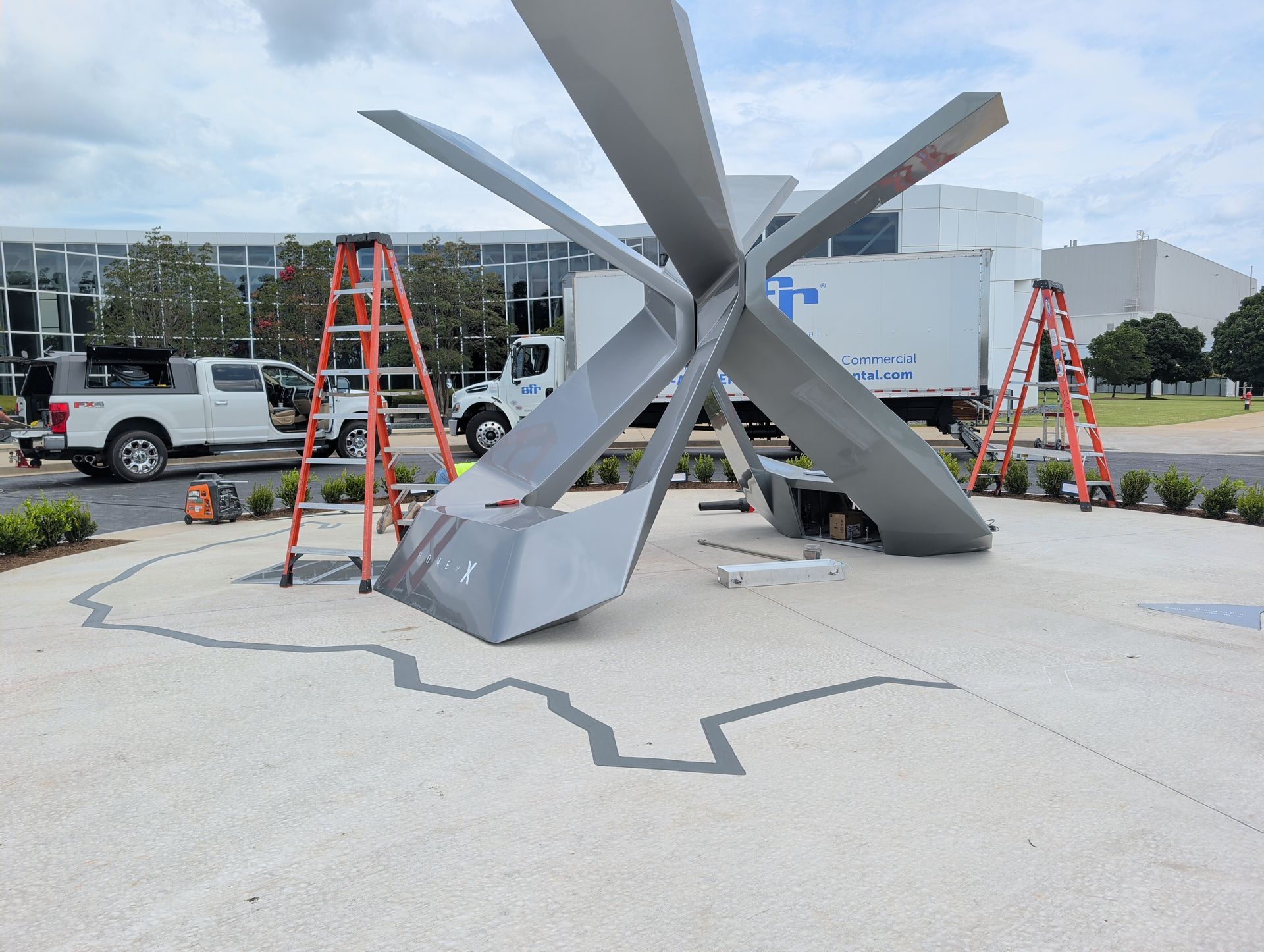
A plain concrete slab can do more than hold up a building entrance. With the right engraving, it can become a feature that people stop and look at. That's exactly what we set out to do in Greer, SC, where we engraved a large United States outline for the launch of the new BMW X5. Here's a look at the project, how the engraving was done, and what business owners across the Upstate should know before adding a custom design to their own concrete. The Project: An 18 ft x 22 ft U.S. Outline For this commercial project in Greer, Blastek Concrete Designs created a custom concrete engraving of the United States outline. The finished design measures 18 feet by 22 feet, making it a large, eye-catching feature that works as a centerpiece for the space around it. How We Engraved It We cut a double outline around the shape of the country, then stained the center in a charcoal color. The double outline gives the design a crisp, defined edge, and the charcoal stain adds strong contrast against the lighter concrete around it. Together, the engraved lines and the concrete staining make the map read clearly from a distance and up close. Why Engraving Works for Commercial Spaces Engraving is a good fit when a business wants something more custom than a standard floor or slab. Because the design is cut into the concrete itself, it becomes part of the surface instead of something sitting on top of it. Businesses often use engraving for logos, maps, and custom artwork at entrances, plazas, lobbies, and event areas, anywhere a space needs to make a statement. What the Engraving Process Looks Like Every engraving project starts with a surface assessment, where we inspect the concrete for cracks, coatings, and texture. Next comes surface preparation, followed by the custom engraving itself. Finally, the surface is sealed to protect the finished design. Planning each step carefully is what keeps lines clean and the final result sharp. Planning Your Own Engraved Design Not sure whether engraving or scoring is the right fit? Read our guide to concrete scoring vs. engraving to see how each technique works and which one suits your space.  Get a Free Quote for Commercial Concrete Engraving Blastek Concrete Designs provides concrete engraving and staining across Greer, Spartanburg, Greenville, and the Upstate. Whether you want a logo, a map, or a custom design for your business, call Toby at (864) 266-8841 or request a free quote to get started.
October 21, 2026
A cracked patio or garage floor is one of the most common reasons Spartanburg homeowners call us — and the assumption is almost always that the fix requires a full overlay or replacement. Sometimes it does. But when the cracking is stable and mostly cosmetic, scoring offers a creative alternative that turns the flaw into part of the design instead of covering it up entirely. Why This Works Concrete scoring cuts intentional lines into a slab to create a pattern — grids, borders, or geometric shapes. When an existing crack runs roughly parallel to where a natural design line would go anyway, incorporating that crack into the scoring pattern makes it read as an intentional part of the design rather than a flaw the eye is drawn to. The crack doesn't disappear, but it stops being the first thing anyone notices. When This Approach Makes Sense This works best on stable, hairline-to-moderate cracking that isn't actively widening or showing signs of ongoing structural movement. If a crack lines up reasonably well with a grid or border pattern, or if the slab has multiple cracks that can be woven into a broader scored design, this is often a faster and more affordable path than a full overlay. When It's Not Enough on Its Own Active cracks, cracks with vertical displacement between the two sides, or extensive spider cracking across the whole slab usually need more than scoring — a repair, and often an overlay, first. We assess the crack pattern before recommending this approach, since scoring over an active crack won't stop that crack from continuing to widen. Pairing Scoring With Stain or Sealer Scoring is often combined with a stain or grind and seal finish to complete the look — the scored lines create the pattern, and the color or sealer ties the whole surface together so the disguised crack blends fully into the finished design rather than standing out as a repair.  Get Your Cracked Concrete Assessed If your patio, walkway, or floor has cracking you'd rather disguise than replace, Blastek Concrete Designs can tell you honestly whether scoring is the right fit. Call Toby at (864) 266-8841 or reach out through our contact page for a free assessment across Spartanburg and the Upstate.
October 14, 2026
Scoring and engraving both cut into concrete to create a decorative pattern, and it's easy to see why homeowners in Spartanburg and the Upstate use the terms interchangeably. But the tools, the depth, and the kind of design each technique produces are genuinely different — and picking the wrong one for your project can mean a result that doesn't match what you pictured. What Scoring Actually Is Scoring uses a saw or grinder to cut shallow, straight lines into the concrete surface, typically to mimic the look of pavers, tile, or large-format stone. It's fast, relatively affordable, and works well for creating clean geometric patterns — grids, borders, or a running-bond layout — across a patio, walkway, or interior floor. What Engraving Actually Is Engraving goes further, using specialized tools to carve more intricate designs, motifs, or even custom logos directly into the surface. This is where our concrete engraving service comes in — it's a different level of detail than scoring, capable of texture, curved lines, and imagery that a straight-line saw cut simply can't produce. Which One Fits Your Project If you want the look of a tiled or paved surface without the cost or maintenance of actual pavers, scoring is usually the right call — it's quicker to install and reads well from a distance. If you want a genuinely custom design element — a business logo at an entrance, a decorative medallion, or an intricate pattern that becomes a visual feature — engraving is worth the additional time and investment. Combining Both on One Project Many of our Spartanburg projects actually use both: scoring to lay out the overall geometry of a patio or floor, with engraving reserved for a focal point, like a centerpiece design or an entryway detail. This gives a project visual structure without every square foot needing the same level of intricate detail.  Get a Design Consultation Not sure which technique fits your space? Blastek Concrete Designs handles both scoring and engraving across Spartanburg, the Upstate, and the surrounding region. Call Toby at (864) 266-8841 or reach out through our contact page for a free consultation.
October 8, 2026
When an epoxy floor peels, bubbles, or fails within the first year, the epoxy product usually gets the blame. In our experience assessing failed floors across Spartanburg, the epoxy itself is rarely the problem — inadequate surface prep is. Getting this step right is what actually determines whether a coating lasts a decade or fails within months. Why Prep Matters More Than the Coating Itself Epoxy needs to mechanically bond to open concrete pores to hold. Coating over a sealed, dirty, or contaminated surface gives the epoxy nothing solid to grip, and it's only a matter of time before it lifts. This is true whether the epoxy product is a premium professional-grade system or a budget kit — no coating overcomes bad prep. Step 1: Diamond Grinding The first and most important step is mechanically grinding the surface with diamond tooling to remove old sealers, coatings, contamination, and to open the concrete's natural pores. This is the same grind and seal process we use for standalone floor restoration, applied here as a preparation step rather than a final finish. Step 2: Crack and Joint Repair Any cracks or damaged joints need to be filled and leveled before coating goes down. Coating over an unrepaired crack means the epoxy fails at exactly that point, since the movement or gap underneath hasn't been addressed. Step 3: Moisture Testing Concrete is porous, and moisture rising from below the slab is one of the leading causes of bubbling and delamination under epoxy. Testing moisture levels before coating — especially on basement and below-grade slabs — determines whether a moisture-mitigating primer is needed before the epoxy goes on. Step 4: Cleaning and Degreasing Oil stains, dust, and residue left on the surface after grinding prevent proper adhesion in those spots, creating localized failure points even on an otherwise well-prepped floor. A thorough clean and degrease immediately before coating is a simple step that's easy to rush and costly to skip. What This Looks Like Done Right On a recent garage floor project in Boiling Springs , proper grinding and prep work is what allowed the finished epoxy to resist stains, moisture, and daily wear from the start — not just the coating layer applied on top.  Get Your Floor Prepped and Coated Right Blastek Concrete Designs handles the full process — prep through final epoxy and coatings — for homes and businesses across Spartanburg and the Upstate. Call Toby at (864) 266-8841 or reach out through our contact page for a free estimate.
October 7, 2026
Epoxy garage floor pricing depends mainly on two things: how much square footage is being coated, and which finish you choose. Here's what that actually looks like in dollar terms for a typical Upstate SC garage, based on our current garage floor epoxy coating pricing. Typical Cost by Garage Size 1-Car (250 sq. ft.): $1,200 – $2,000 2-Car (500 sq. ft.): $2,400 – $4,500 3-Car (750 sq. ft.): $3,600 – $6,500  What's Included in That Price A garage floor epoxy price covers the full process, not just the coating itself — surface grinding and prep, crack repair where needed, the epoxy application, and a topcoat sealer. Skipping or shortcutting prep is the most common reason an epoxy floor fails early, so it's built into the base price rather than treated as an optional add-on. What Pushes the Price Up Custom flakes, metallic finishes, and premium sealers add cost but extend durability. A solid-color epoxy floor sits at the lower end of the range; adding a decorative flake broadcast, a metallic finish, or a higher-grade polyaspartic topcoat moves the price up within — or sometimes above — the ranges listed here. Solid Color vs. Metallic vs. Polyaspartic Solid-color epoxy: $3.00–$5.50 per sq. ft. — the most straightforward, budget-friendly option. Metallic epoxy: $6.00–$10.00 per sq. ft. — a dimensional, marbled look with more visual depth. Polyaspartic coatings: $7.00–$12.00 per sq. ft. — faster cure time and added durability, often used where the garage needs to be back in use quickly. Getting an Accurate Quote These ranges are a starting point — an accurate number depends on your garage's exact square footage, current slab condition, and which finish you're leaning toward. Blastek Concrete Designs installs epoxy and coatings for homes and businesses across Spartanburg and the Upstate. Call Toby at (864) 266-8841 or reach out through our contact page for a free, on-site quote.
September 30, 2026
A basement slab isn't the same coating challenge as a garage or an above-grade floor. Below-grade concrete sits in constant contact with surrounding soil, and that changes the moisture conditions a coating has to deal with — which is exactly why basement epoxy projects need a different approach from the start. Why Basements Are a Different Moisture Situation Concrete slabs below grade are in ongoing contact with soil moisture, and without a proper vapor barrier beneath the slab, water vapor can migrate up through the concrete continuously — not just after rain, but as an ongoing condition. This is very different from an above-grade garage slab, where moisture exposure is more occasional and usually surface-level. Why This Matters Before Coating Coating over a basement slab without checking moisture levels first is one of the most common reasons basement epoxy floors fail — bubbling, blistering, or delaminating within months as trapped vapor pressure builds up beneath the coating. A moisture test before any coating work begins isn't optional for a basement project; it's the step that determines whether standard epoxy will work or whether additional preparation is needed. What Extra Prep Might Be Required If moisture levels come back elevated, a moisture-mitigating primer applied before the main epoxy coating system can create a vapor barrier at the surface, allowing a standard coating to be applied successfully even over a slab with ongoing moisture. Skipping this step to save time or cost is exactly what leads to the bubbling and peeling failures we get called out to fix on basements that were coated without a moisture check first. Other Basement-Specific Considerations Basements also tend to run cooler and see less natural light than above-grade spaces, which affects cure times and can make color selection look different once installed than it did in a sample under different lighting. We account for both when planning a basement project, rather than treating it as a smaller version of a garage job.  Get Your Basement Slab Tested Before committing to a basement epoxy floor, get the slab's moisture levels checked. Blastek Concrete Designs handles moisture testing and epoxy and coatings installation across Spartanburg and the Upstate. Call Toby at (864) 266-8841 or reach out through our contact page for a free consultation.
September 23, 2026
Ask five different homeowners how long their garage epoxy floor lasted and you'll likely get five different answers — sometimes years apart. The variance almost always comes down to a handful of factors that have nothing to do with luck and everything to do with prep, material quality, and how the floor gets used. Surface Prep Is the Single Biggest Factor An epoxy coating is only as strong as its bond to the concrete beneath it. Skipping proper grinding to open the concrete's surface pores, or coating over an existing sealer instead of bare, properly profiled concrete, is the single most common reason coatings fail early — peeling, bubbling, or delaminating within the first year or two, regardless of how good the epoxy itself is. Moisture Testing Before Coating Concrete is porous, and moisture vapor rising from below the slab is a leading cause of bubbling and blistering under a coating. Testing moisture levels before application, and addressing the issue with a moisture-mitigating primer if needed, prevents a failure mode that has nothing to do with the epoxy product and everything to do with what's happening underneath it. Material Grade Matters More Than People Expect A professional-grade epoxy coating system, rated for vehicle traffic and temperature swings, holds up meaningfully longer than a lower-grade DIY kit — particularly under the weight and heat of a parked car, where cheaper systems are prone to hot tire pickup and softening.  How the Space Gets Used A garage used purely for parking wears differently than one doubling as a workshop with rolling tool chests, dropped tools, and chemical exposure from oils or solvents. Heavier use doesn't necessarily mean a shorter lifespan, but it does mean the coating system needs to be matched to that use case from the start — a lighter residential-grade coating in a heavy-use shop setting will show wear faster than a system built for it. What a Well-Installed Floor Looks Like Years Later With proper prep, moisture testing, and a coating system matched to how the space is actually used, a garage epoxy floor can hold up well for many years with minimal maintenance beyond routine cleaning. The floors that fail early are almost always missing one of the steps above, not simply unlucky. Get Your Garage Assessed Considering a garage epoxy floor, or dealing with one that's already showing problems? Blastek Concrete Designs handles epoxy and coatings across Spartanburg and the Upstate. Call Toby at (864) 266-8841 or reach out through our contact page for a free estimate.
September 16, 2026
HOA clubhouses, event pavilions, and shared common areas take a different kind of wear than a private home or a warehouse. Hundreds of different feet walk through in a given month, spills happen at every event, and the space still has to look good enough to justify the association dues or rental fee. Plain gray concrete rarely does that job — but a full renovation is usually more than the space needs. We've worked on exactly this kind of project across Spartanburg and Greer, including a full grind, stain, and seal at an event space in Spartanburg and a clubhouse floor refresh at the Claremont Subdivision in Greer. This post covers the decorative concrete options that make sense for shared community and event spaces, and what property managers and HOA boards should know before budgeting for one. Why Decorative Concrete Fits Shared Spaces Durability under high, varied foot traffic — kids, event chairs, catering carts, dance floors Lower long-term maintenance than tile or carpet in common areas Design flexibility — color and pattern can match a clubhouse's existing branding or architecture Cost-effective compared to a full flooring replacement across a large shared footprint Decorative Options for Clubhouses and Event Venues Concrete Engraving and Scoring Engraving lets us cut clean geometric lines or custom patterns directly into the concrete — a strong option for entryways, logo medallions, or borders around a clubhouse lobby. It's one of our most requested engraving and scoring applications because it adds a custom look without changing the underlying material. Stain and Color Variation For larger open floor areas — ballrooms, event halls, pavilion floors — concrete staining gives a warm, natural color variation that reads as intentional rather than a plain poured floor. It holds up to repeated event setup and breakdown far better than most flooring alternatives. Decorative Overlays Where the existing slab has wear or staining that a color treatment alone won't fix, a decorative overlay resurfaces the floor with a new textured or patterned finish — useful for older clubhouses where the original concrete has years of wear on it. Real Projects: What This Looks Like Our event space grind, stain, and seal project in Spartanburg addressed exactly this kind of shared-use floor — a space that hosts different events week to week and needed a finish that could handle setup, breakdown, and heavy foot traffic without looking worn within a year. The Claremont Subdivision Clubhouse project in Greer is a similar case: an HOA common area where the board wanted a refreshed look without the cost or downtime of a full flooring replacement. What HOA Boards and Property Managers Should Ask Can the space stay in partial use during the project, or does it require a full closure? What's the expected turnaround time for a floor this size? How does the finish hold up to folding chairs, tables, and event equipment being moved repeatedly? What's the maintenance and re-sealing schedule for a high-traffic shared space like this? Is the finish slip-resistant, particularly near entrances where moisture gets tracked in? How Blastek Approaches Community and Event Spaces We work directly with HOA boards, property managers, and event venue owners across Spartanburg, Greer, and the Upstate to schedule around the space's actual usage — not just our own timeline. Because these floors serve a lot of different people, we walk the space, talk through what the finish needs to survive, and recommend the option that fits the budget and the traffic pattern honestly.  Get a Free Estimate for Your Community or Event Space Give Toby a call at (864) 266-8841 or reach out through our contact page . We'll walk your clubhouse, pavilion, or event space and recommend the finish that fits how it's actually used.