Basement Floor Crack Repair in Spartanburg, SC | Blastek
Almost every basement floor in the Upstate has a crack somewhere. Most of them are harmless. Some are worth watching. And a few are telling you something about the slab that needs attention before anything else happens to that floor. If you're planning to polish, seal or put an epoxy coating on your basement floor, the cracks are the first thing to deal with — because whatever is in the concrete underneath will show up in the finish on top.
Here's how we look at basement floor cracks at Blastek Concrete Designs, what can be repaired, and why repair always comes before the finish.
Why Basement Floors Crack
Concrete cracks for a handful of predictable reasons, and basement slabs see most of them:
- Shrinkage. Concrete shrinks as it cures. Thin, random hairline cracks that showed up in the first year or two are usually just the slab settling into itself.
- Settling of the ground below. If the soil under the slab wasn't compacted well, sections of the floor can drop slightly over time, leaving a crack with one side lower than the other.
- Moisture. Basement slabs sit below grade, in direct contact with the ground. Moisture moving up through the concrete can widen existing cracks and cause the surface to flake or pit.
- Load and use. Workshops, home gyms and storage areas put concentrated weight on the floor. Heavy equipment in one spot can stress the slab over time.
Hairline vs. Wider Cracks: What's Cosmetic and What to Watch
Not every crack needs the same response. A quick way to sort them:
- Hairline cracks — about the width of a credit card edge or less, flat on both sides, and not growing. These are almost always cosmetic. They still need to be filled before a polish or coating, but they aren't a sign of a bigger problem.
- Wider cracks — ones you can fit a coin into, or that have chipped, crumbling edges. These should be cleaned out and properly filled, because they tend to keep opening if they're left alone.
- Uneven cracks — where one side sits higher than the other. That usually means part of the slab has moved, and it's worth having it looked at before you finish the floor.
- Cracks that let water in — if you see dampness, staining or water along a crack after rain, moisture is coming through. That needs to be addressed before any coating goes down.
A simple test: mark both ends of a crack with a pencil and the date, and check it again in a few weeks. If it has grown, it's active and needs more than a cosmetic fix.
How Basement Floor Cracks Get Repaired
Our flooring repair work follows the same basic sequence on most basement floors:
- Clean out the crack. Loose material, dirt and old filler are ground or routed out so the repair bonds to solid concrete, not to debris.
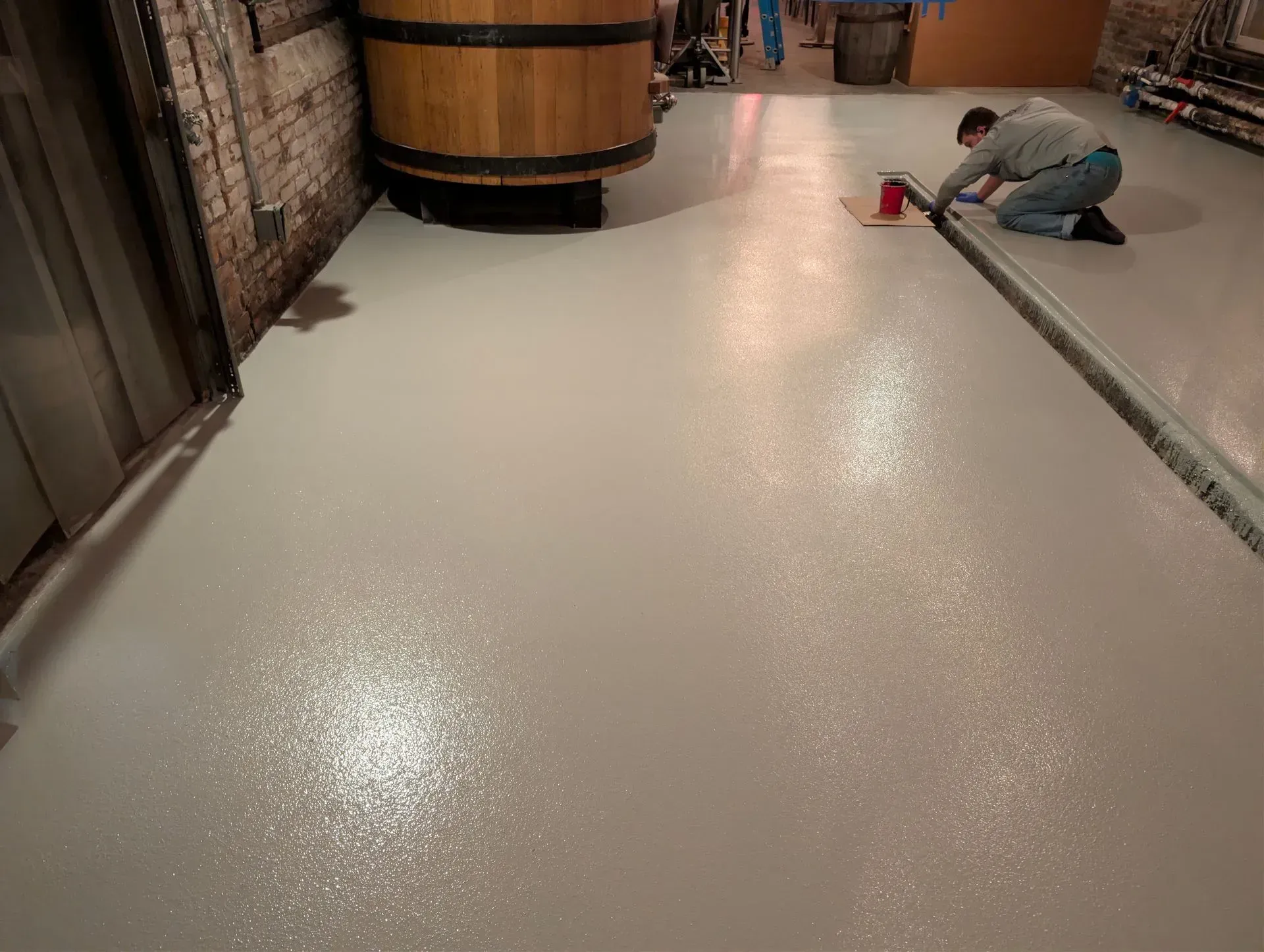
- Fill and seal. The crack is filled with a repair material suited to the floor and the finish that's going on top, then sealed so it doesn't keep spreading.
- Repair spalled or damaged areas. Where the surface has flaked or pitted around the crack, we grind and smooth the deteriorated concrete so the floor is level and sound.
- Grind it flush. Once the repair has cured, it's ground level with the surrounding floor so there's no ridge or dip under the finish.
For cracks that are structural rather than surface-level, our concrete repair services include epoxy crack injection and bonding, which seal and stabilize the damage instead of just covering it.
Why Cracks Have to Be Repaired Before Polishing, Sealing or Coating
It's tempting to think a coating will simply cover the cracks. It won't — at least not for long.
- Cracks show through. An epoxy coating follows the surface underneath. An unrepaired crack will mirror through the coating as a visible line, and if the crack moves, the coating cracks with it.
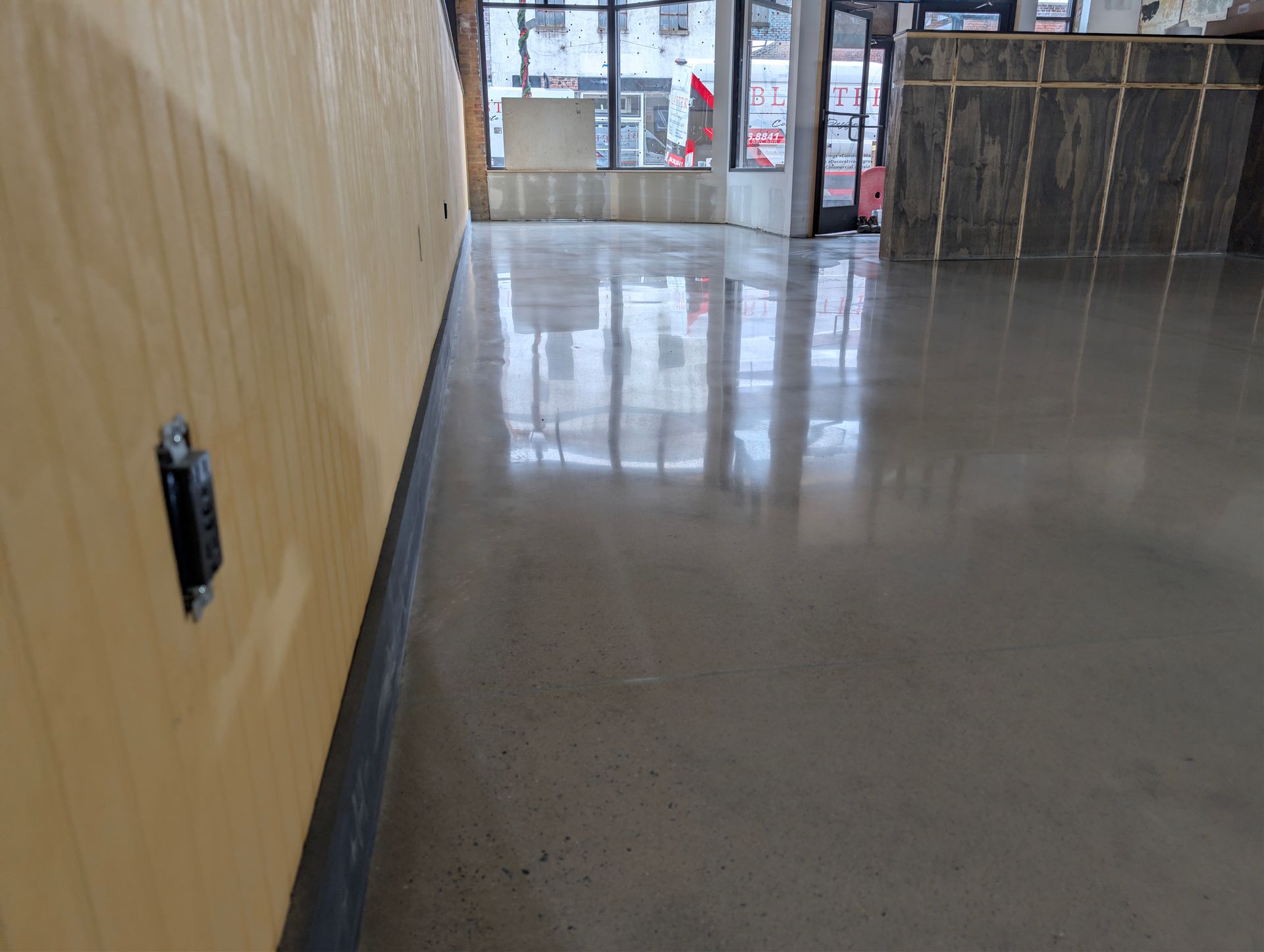
- Polishing exposes them. Concrete polishing grinds into the surface of the slab, which makes existing cracks more visible, not less. Filling them first gives a cleaner, more uniform floor.
- Moisture finds the weak spots. On a below-grade slab, moisture tends to come up through cracks first. Sealing them is part of protecting the coating or sealer that goes on top.
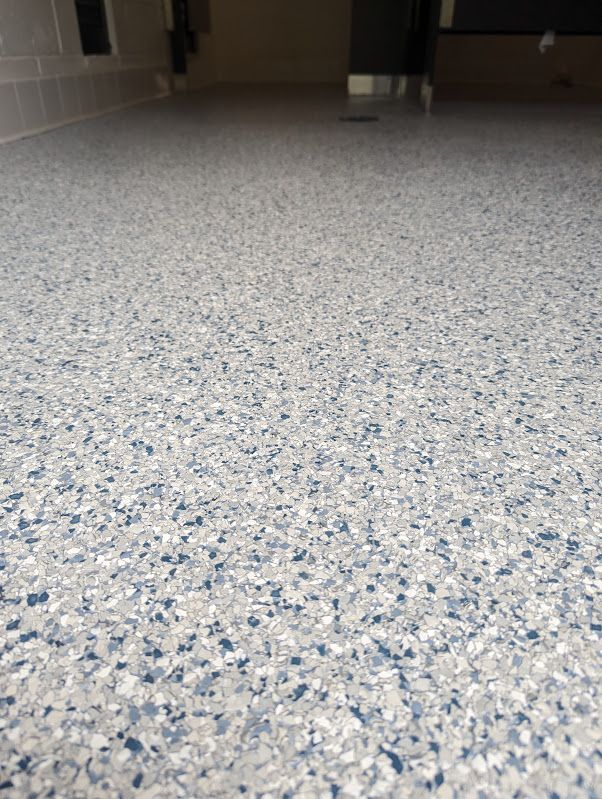
That's why crack repair is part of the prep on every basement project we do. If you're planning a coating, our guides on basement epoxy flooring and prepping a concrete floor before epoxy walk through the rest of the process. If you'd rather keep the natural look of the concrete, grinding and sealing is another option once the cracks are repaired.
When a Crack Needs More Than a Surface Repair
Most basement floor cracks are surface issues. A few signs suggest something more is going on:
- The crack keeps getting wider over weeks or months.
- One side of the crack is noticeably higher than the other.
- Doors nearby have started sticking, or the floor feels uneven underfoot.
- Water comes through the crack regularly.
If you see any of these, it's worth having the slab assessed before investing in a finish. We'll look at the crack, tell you whether it's a cosmetic fix or a structural repair, and explain what it will take to make the floor ready for whatever finish you have in mind.
A Good Project for Any Time of Year
Because basement floors are indoors, crack repair and floor finishing there aren't held up by outdoor weather the way patios and driveways can be. If you've been meaning to turn an unfinished basement into usable space, the cooler months are a good time to get the floor sorted out.
Get Your Basement Floor Assessed
Blastek Concrete Designs repairs, polishes, seals and coats concrete floors for homes and businesses across Spartanburg and the Upstate. If your basement floor has cracks and you're not sure where to start, we'll take a look and give you a straight answer on what it needs.
Call (864) 266-8841 for a free quote, or learn more about our flooring repair services.