Healthcare & Medical Facility Floor Coatings in the Upstate
Healthcare & Medical Facility Floor Coatings in the Upstate
In a medical facility, the floor does more work than almost any other surface in the building, and it does it under scrutiny. Clinics, rehab centers, labs, and vet offices all share the same hard requirements: the floor has to be cleanable down to the seam, resist constant disinfecting, hold up to rolling equipment, and stay safe underfoot for patients who may not be steady on their feet. A worn or porous floor isn't just a cosmetic problem in these spaces. It's an infection-control and liability problem.
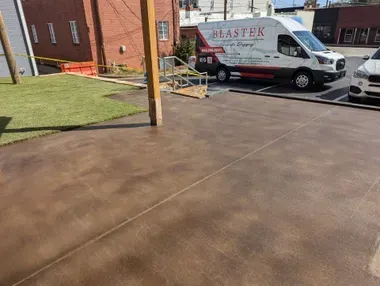
We're Blastek Concrete Designs, a father-and-son team out of Spartanburg with 15 years finishing and coating existing concrete across the Upstate. We don't pour slabs; we restore and protect the ones you have. We completed the floor at Prisma Health Rehabilitation Center in Greenville, and here's what we've learned about what medical and healthcare spaces actually need from their floors.
Why Standard Flooring Fails in Medical Settings
Tile, vinyl, and bare sealed concrete all run into the same problems in a healthcare environment:
- Seams and grout lines trap bacteria and resist cleaning, exactly the opposite of what an infection-control plan needs.
- Constant disinfecting with harsh chemicals breaks down finishes that aren't rated for it.
- Rolling loads from wheelchairs, gurneys, and equipment carts crack and wear weaker surfaces.
- Moisture from cleaning and spills undermines flooring that isn't fully sealed.
A properly specified coating or seal solves all four at once by creating a continuous, dense, chemical-resistant surface with no gaps for contamination to hide in.
What Medical Facilities Need From a Floor
Seamless, Sanitary Surfaces
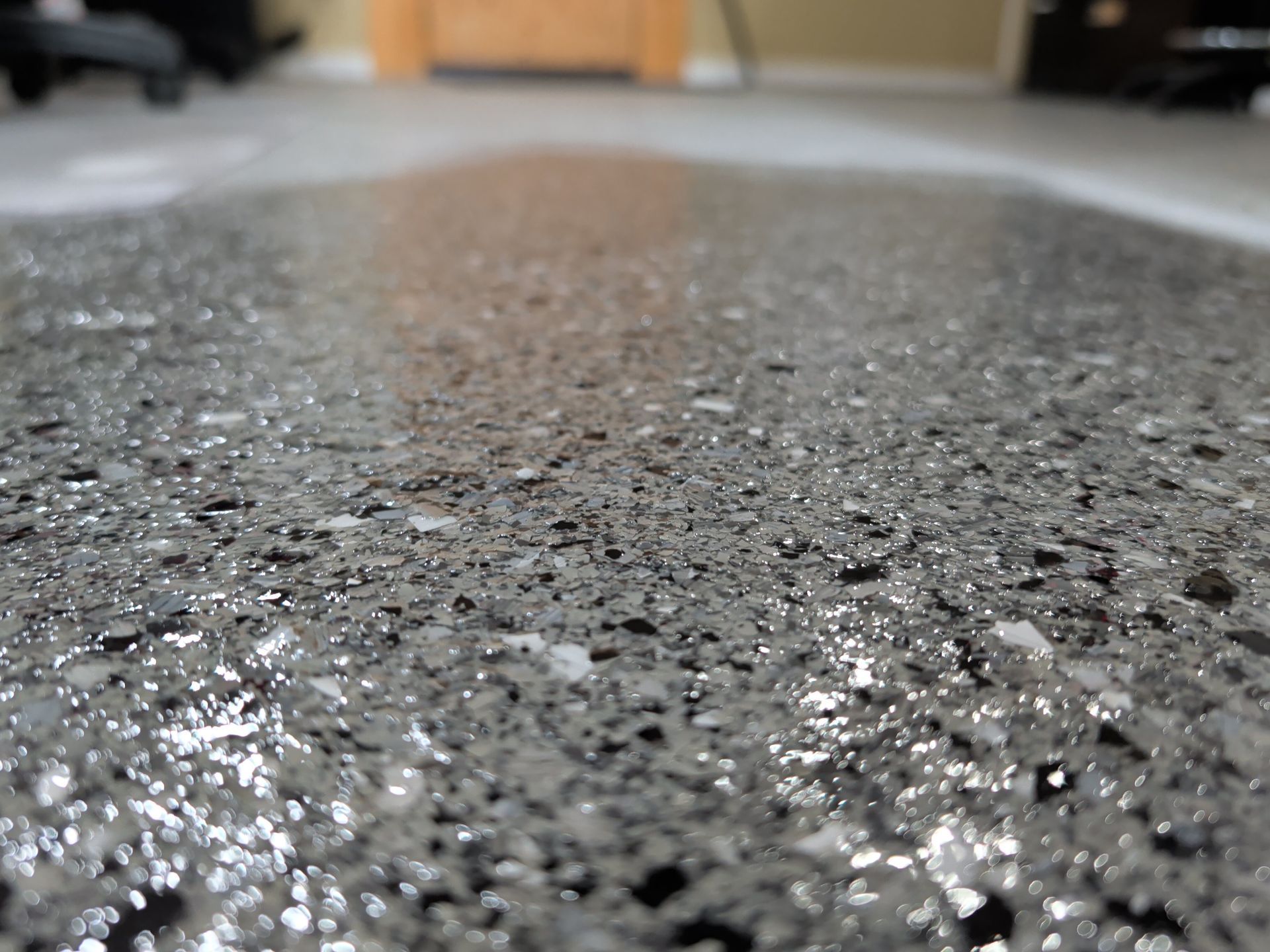
The single most important feature is a continuous surface. A seamless epoxy coating or a properly sealed concrete floor has no grout lines or joints where bacteria collect, so it cleans completely and supports infection control rather than working against it.
Chemical and Disinfectant Resistance
Healthcare floors get cleaned constantly with aggressive disinfectants. The coating or sealer has to shrug those off without clouding, softening, or breaking down. That's a spec question, and it's one of the first things we confirm for a medical client.
Slip Resistance and ADA Safety
Patient safety is non-negotiable. We can build slip resistance into the finish for wet zones and high-traffic corridors, which matters enormously in rehab centers and clinics where patients may be unsteady, using mobility aids, or recovering.
Durability Under Rolling Loads
Wheelchairs, gurneys, equipment carts, and constant foot traffic demand a hard, abrasion-resistant surface. A ground-and-sealed or coated concrete floor handles that load for years without the cracking you'd see from lesser flooring.
The Right System for the Space
There's no single answer for every medical facility. The right choice depends on the room, the cleaning regimen, and the traffic:
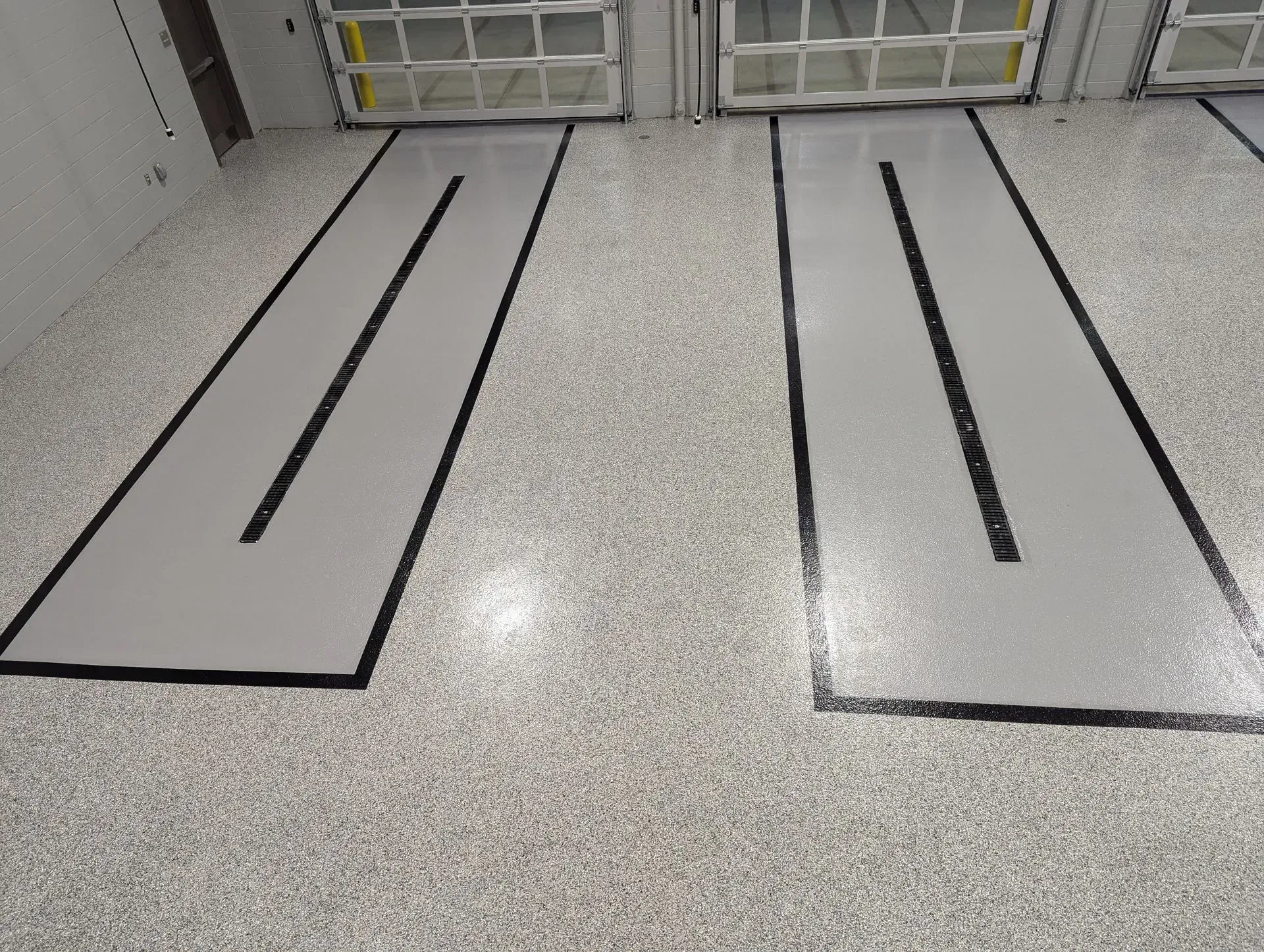
- Seamless epoxy coatings for labs, treatment rooms, and clinical areas needing maximum chemical resistance and a fully non-porous surface.
- Urethane systems where extra chemical and thermal resistance is needed.
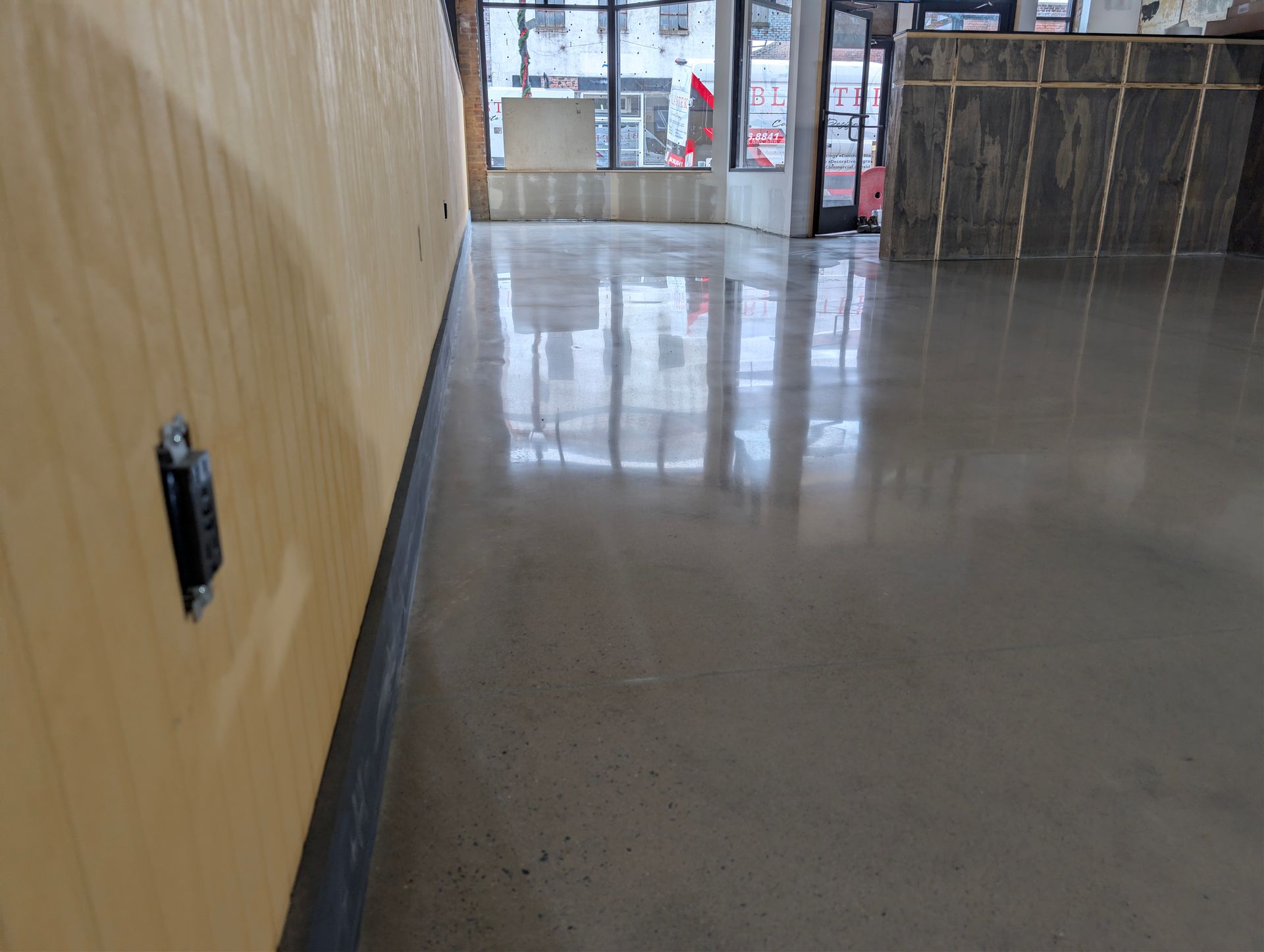
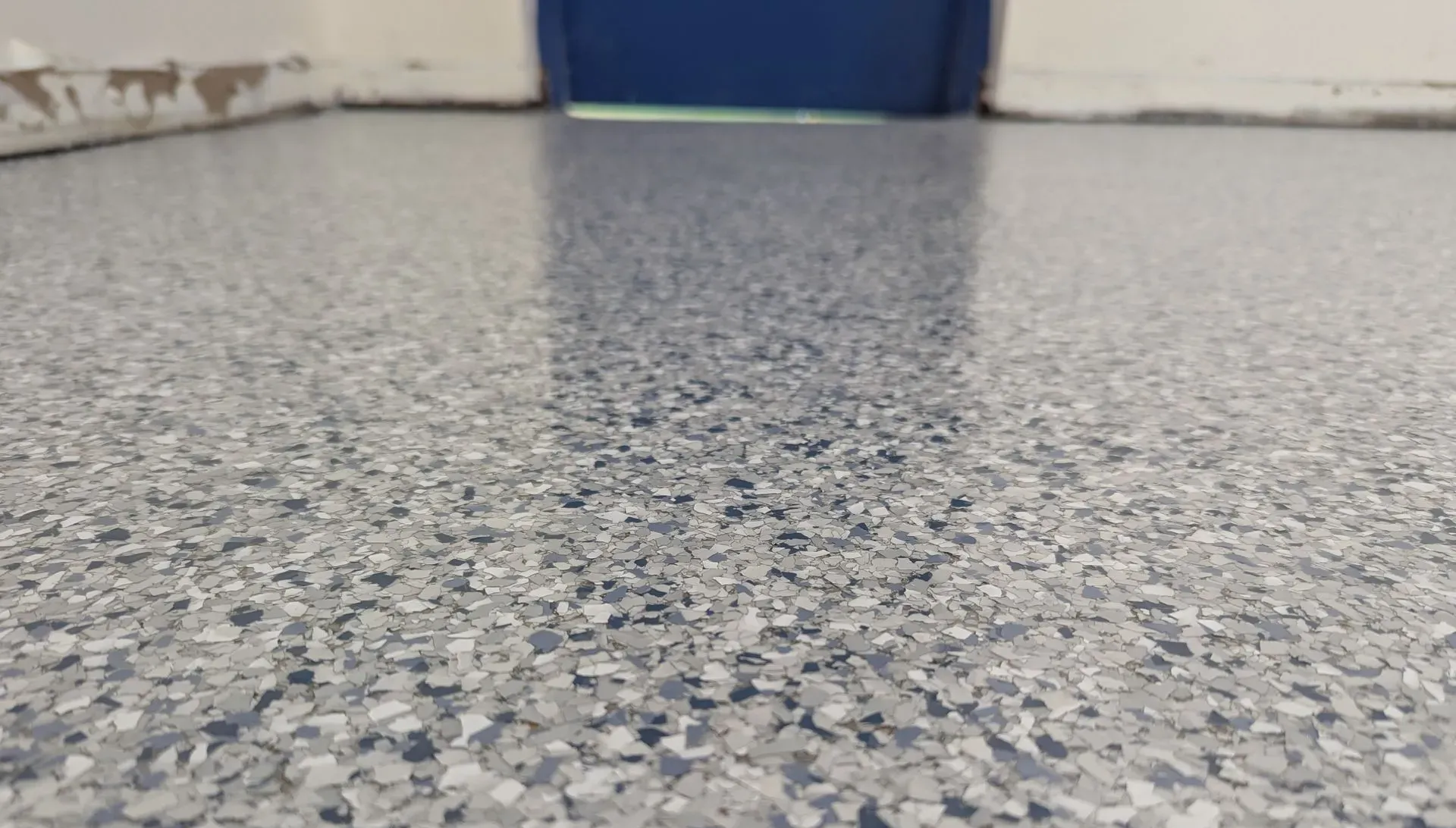
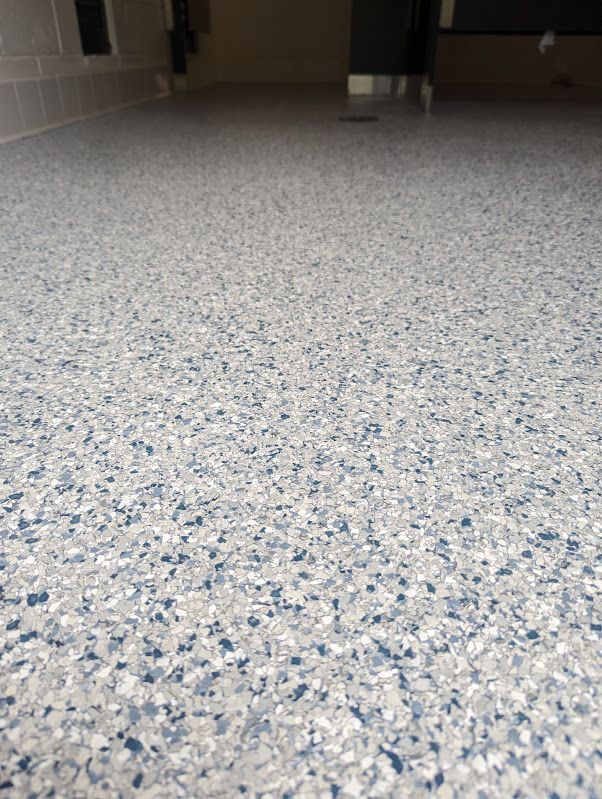
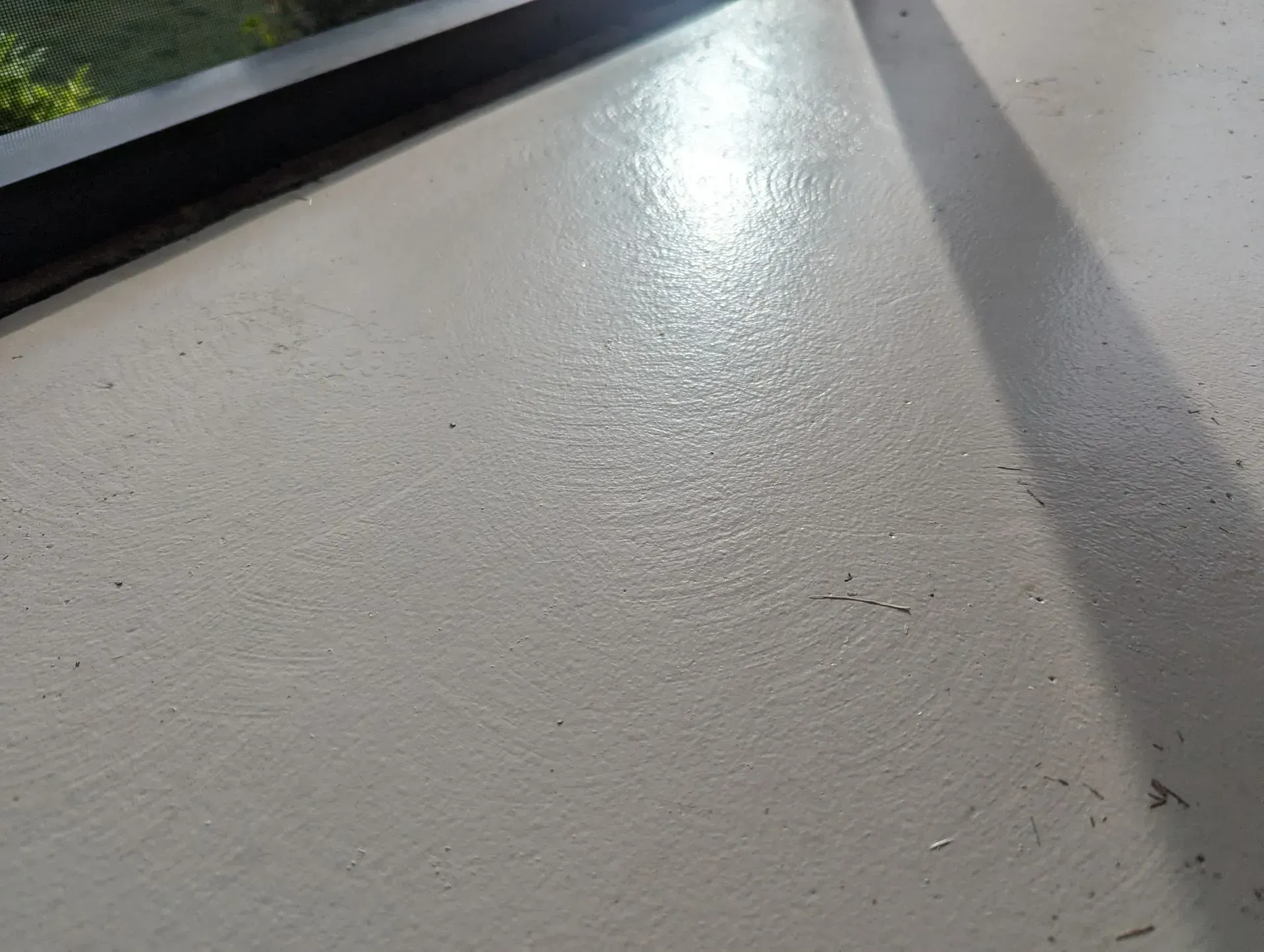
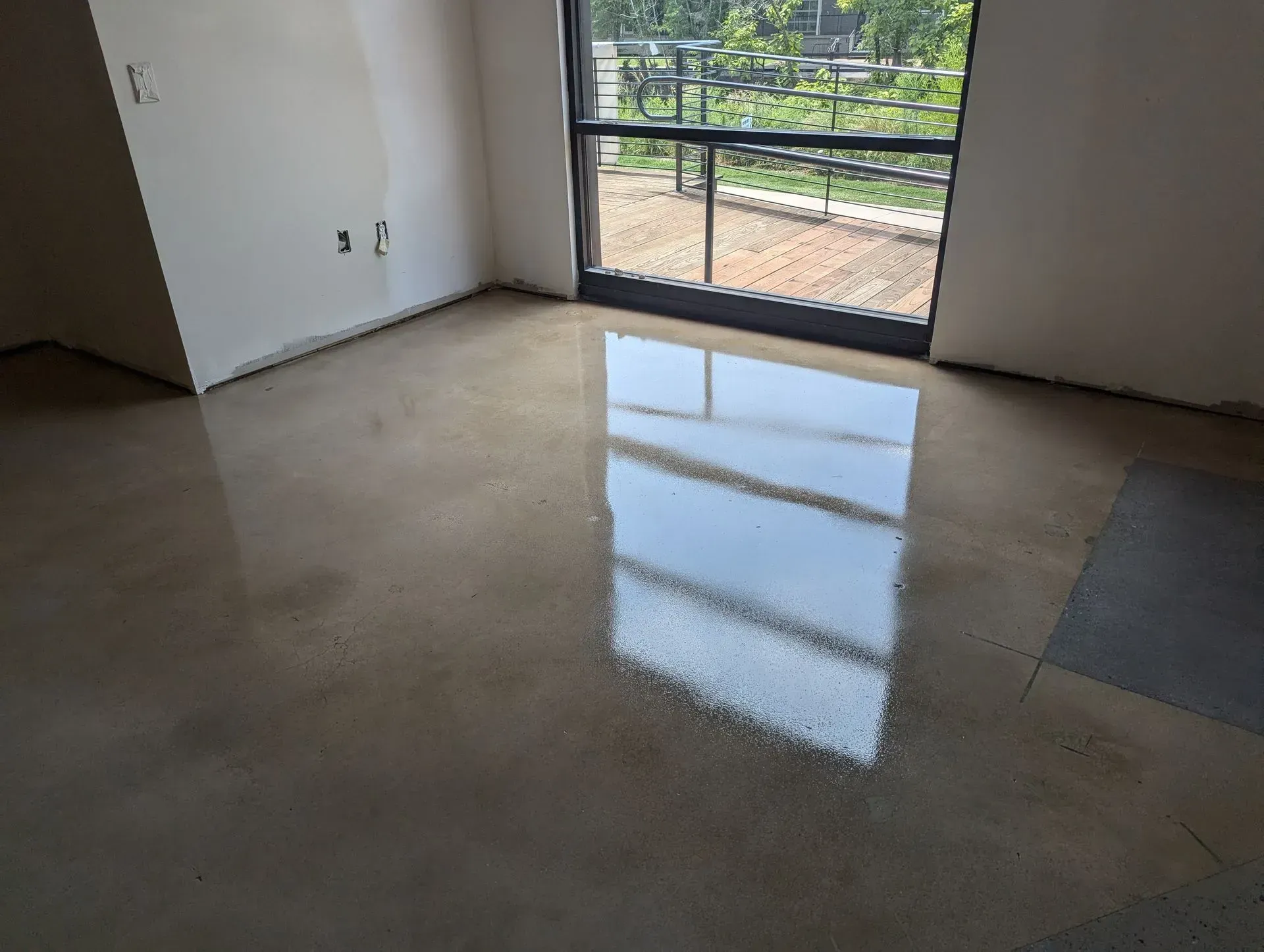
- Ground and sealed concrete for spaces that need a clean, durable, easy-care floor without a full coating build. This is exactly what we did at Prisma Health Rehabilitation Center, where we ground and sealed the concrete with a Coval UTC topcoat for a smooth, durable surface in a cycling-focused rehab space near the Swamp Rabbit Trail.
We'll tell you honestly which system fits. Not every room needs the most expensive coating, and we won't upsell you into one.
Minimizing Downtime in an Operating Facility
A clinic or rehab center can't simply close for a week. Downtime planning is part of the job, not an afterthought:
- We phase the work room by room or wing by wing so operations continue.
- We schedule around your patient hours, including evenings and weekends.
- Our grinding and prep run with dust collection to keep the environment clean and controlled.
- We give you a realistic cure timeline up front so you can plan reopening each area.
What we won't do is rush a cure to hit a date, because a floor that gets disinfected or rolled on before it's ready is a floor that fails early in exactly the environment that can least afford it.
What to Verify Before Hiring a Medical Floor Contractor
Healthcare flooring is a specialized job. Before you sign, confirm:
- Is the coating or sealer rated for the disinfectants your facility uses?
- Does the system create a genuinely seamless, non-porous surface?
- Can they build in slip resistance for patient-safety zones?
- Will they phase work around your operating hours?
- Do they prep mechanically with grinding, not just chemical etching?
How Blastek Approaches Medical Floors Across the Upstate
Our process starts with the room and how it's used: we assess the slab and your cleaning and traffic demands, prep mechanically, repair any damage, and install the right seal or coating for that space. We've done this for healthcare and institutional clients across Greenville, Spartanburg, Greer, and the wider Upstate, including the rehab floor at Prisma Health near the Swamp Rabbit Trail. We bring the same care to a single treatment room as to a full facility.
Get a Free Estimate for Your Medical Facility Floor
If you run a clinic, rehab center, lab, or veterinary practice with a floor that's hard to clean or starting to fail, let's fix it the right way. Give Toby and the team a call at (864) 266-8841 for a free on-site estimate, or reach us through our contact page. We'll assess your space, talk through disinfectant and slip-safety requirements, and give you a straight number and a phased timeline that keeps you running.