Stained Concrete Patios in Spartanburg, SC: What to Know Before You Start
If you've got a concrete patio in Spartanburg, Boiling Springs, Inman, or anywhere in the Upstate that's seen better days, staining it is almost always a better option than replacing it. The slab you have is already there. It's structurally sound. The problem is the surface — faded, stained, or just a plain gray slab that doesn't match the outdoor space you're trying to create.
Stained concrete addresses all of that without removing a single square foot of existing concrete. Done right, it lasts years, handles South Carolina weather, and produces a result that looks far more intentional than any new gray slab would.
Here's what to understand before you start a patio staining project in the Upstate.
What Staining Does to Concrete — and What It Doesn't
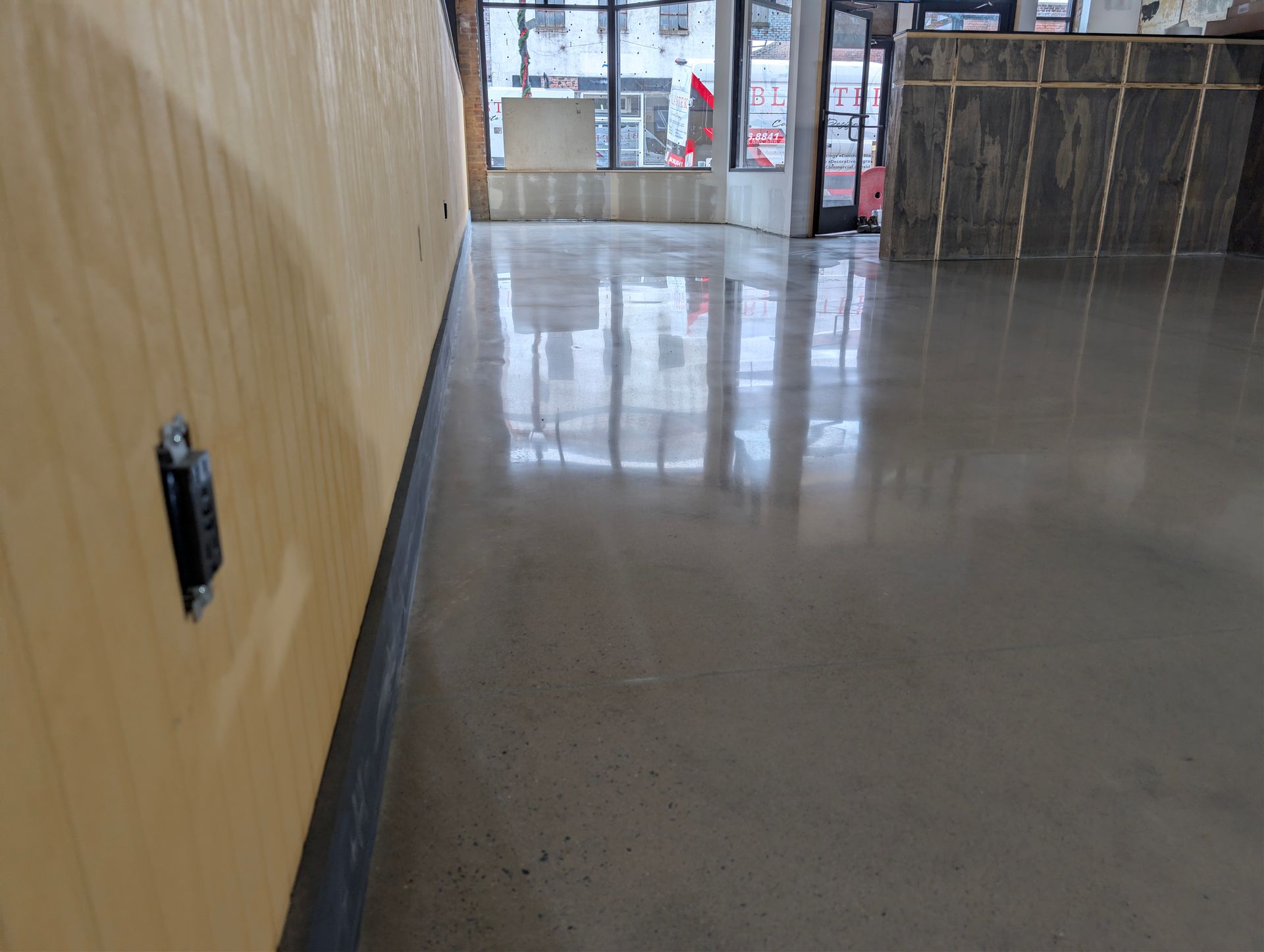
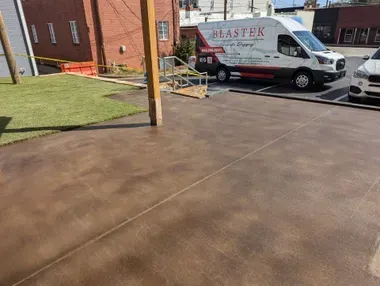
Staining doesn't add a new layer on top of the slab. It changes the color of the existing concrete and seals it. The concrete itself is still the surface — textured, slightly porous, with the character and variation of the original slab showing through the color.
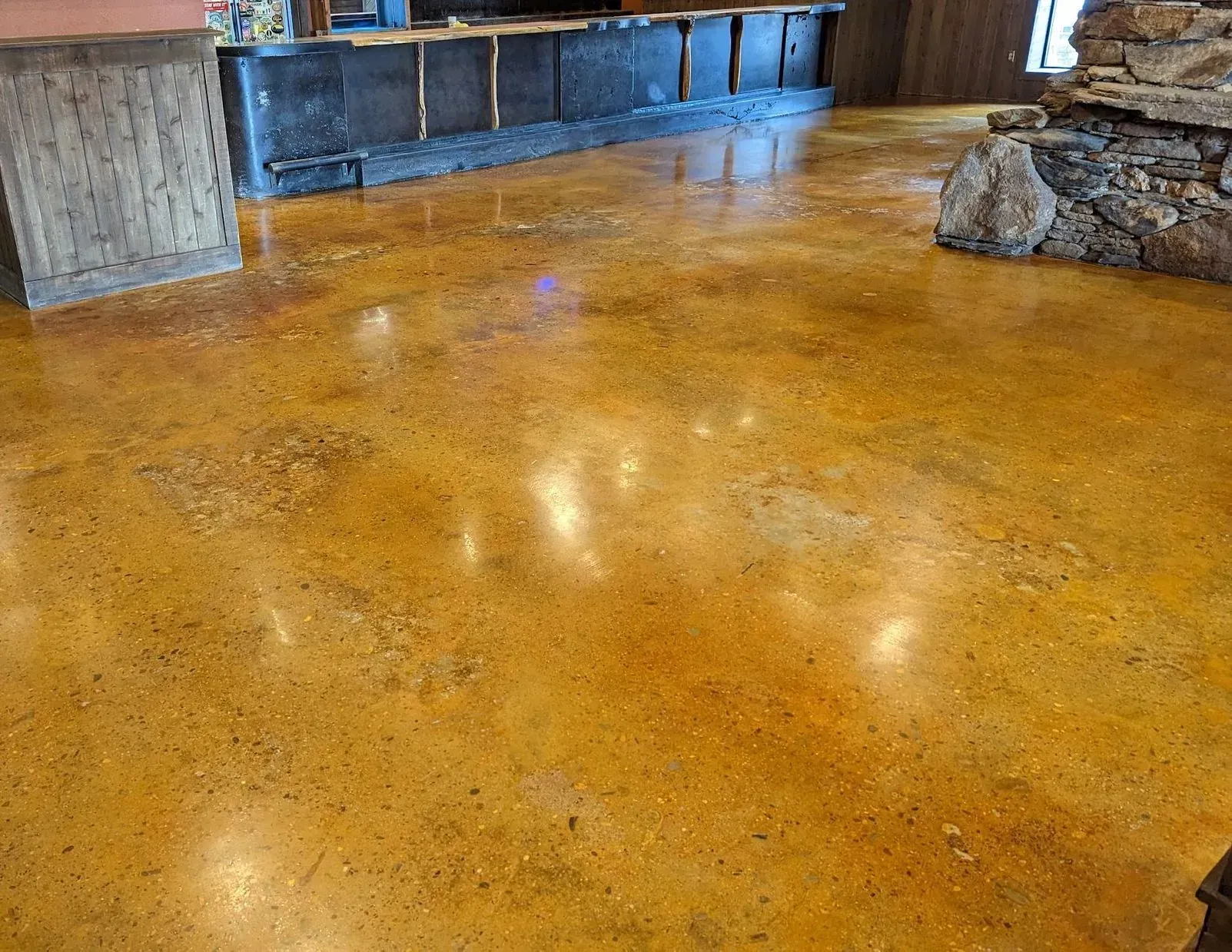
That's a feature, not a bug. Acid stain in particular produces a rich, mottled, organic look that's different on every slab because it chemically reacts with the minerals in your specific concrete. The variation is what makes it look like a finished material rather than paint on a floor.
What staining doesn't do: hide major structural cracks, level an uneven surface, or cover deep spalling. Those have to be addressed separately before any stain goes down. A stained floor reveals everything in the slab — which means prep work matters as much as the stain itself.
Why South Carolina's Climate Creates Specific Challenges for Outdoor Stained Concrete
An indoor stained concrete floor and an outdoor patio stain face completely different environments. Upstate SC in particular puts outdoor concrete through conditions that most other markets don't deal with the same way:
UV Exposure
South Carolina summers deliver intense, direct sun — especially on south and west-facing patios. Standard interior sealers yellow, chalk, or break down under UV exposure, sometimes within a single season. The right outdoor patio finish uses a UV-stable sealer rated for direct sun, not the same product that goes on an interior floor. This is one of the most common places we see other contractors cut corners.
Humidity and Moisture
High ambient humidity plus the freeze-thaw cycles that Upstate SC does see — less severe than further north, but real — means outdoor sealers have to flex slightly with the concrete rather than forming a brittle film. The wrong sealer cracks, peels, and allows moisture to get underneath, which degrades the stain over time.
Pollen and Biological Growth
Spartanburg's pollen season is aggressive, and sealed outdoor concrete accumulates pollen, algae, and mildew faster than indoor surfaces. The sealer has to be cleanable without using products that break it down. Knowing what cleaning products are safe for your specific sealer is something we cover before every patio project.
Drainage
Patios that pool water or drain toward the house cause long-term problems for any finish system. If your patio has a drainage issue, it needs to be addressed before staining — and not after. Sealing over a patio that holds water will accelerate sealer failure regardless of product quality.
Stain System Options for Spartanburg Patios
Acid Stain
The classic outdoor patio finish. Acid stain chemically reacts with the calcium and minerals in the concrete to produce rich, layered, earth-toned color — browns, tans, terracotta, deep greens, warm grays. No two applications look the same, which is part of the appeal. The color is in the concrete, not on top of it, so it doesn't peel or chip. Sealed with a UV-stable outdoor sealer, acid-stained patios hold up well in Upstate conditions.
Water-Based Stain
More color options, more predictable results. If you have a specific color in mind — something that matches landscaping, siding, or outdoor furniture — water-based stain gives you better control than acid stain. The look is slightly more uniform, which fits modern or contemporary outdoor aesthetics well.
Grind, Stain, and Seal
For patios with old failed sealers, contamination, or surface staining that would interfere with new stain application, we grind the surface first before staining. This removes whatever's on top and opens the concrete to accept the stain cleanly. Our concrete grinding and sealing process is the foundation for most of our outdoor staining work — it's what makes the color consistent and the bond reliable.
What the Process Looks Like
For a typical Upstate patio staining project:
- Assessment: We walk the slab, check for cracks, drainage issues, existing sealers or contamination, and moisture conditions.
- Surface prep: Clean, grind if needed, repair cracks and patches. Test stain color in a small area.
- Stain application: Apply acid or water-based stain in the selected color. Allow to react and dry fully.
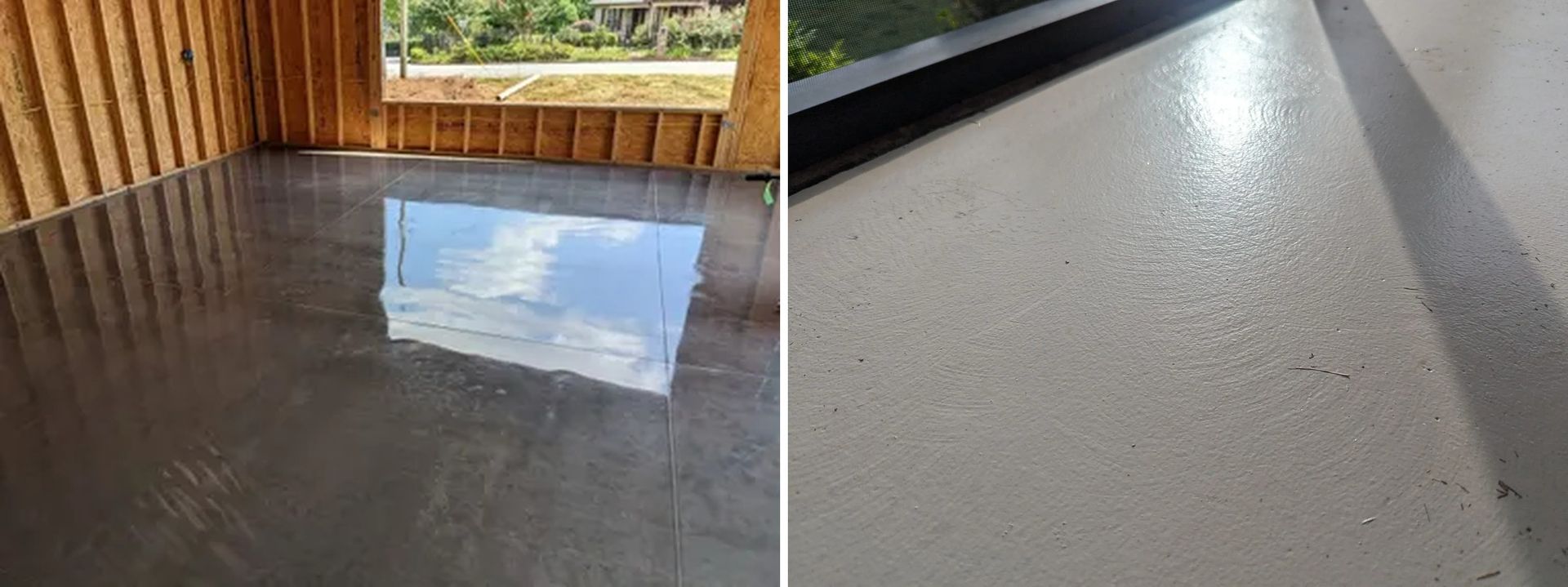
- Sealer application: Apply UV-stable outdoor sealer in the appropriate sheen — matte, satin, or low-gloss. Slip-resistant additive mixed in for safety.
- Cure time: Most patio stain-and-seal projects can handle light foot traffic in 24 hours and furniture in 48-72 hours.
Most residential patio projects are done in 2-3 days. Larger or more complex surfaces take longer.
What to Ask Before Signing a Contract
- What sealer are you using, and is it rated for outdoor UV exposure? — this is the single most important question for an outdoor patio project. If the contractor can't name the product or doesn't distinguish between indoor and outdoor sealers, that's a warning sign.
- Will you test the stain color on the actual slab before full application? — concrete takes color differently than a sample card. A test patch is non-negotiable on any quality patio project.
- How do you handle existing contamination or failed sealer? — stain bonds to clean, open concrete. If the existing surface has residue, oil, or old sealer that isn't addressed first, the stain won't absorb evenly.
- What cleaning products can I use on this sealer? — the wrong cleaner degrades the sealer faster. You need to know this before the project is done, not after the sealer starts to fail.
- What does re-sealing look like in 3-5 years? — outdoor sealers wear faster than indoor sealers. A good contractor will tell you what the maintenance program looks like upfront.
What Outdoor Patio Staining Costs in Spartanburg
For most residential patios in the Upstate, stain-and-seal projects fall between $3 and $7 per square foot depending on slab condition, stain system, and prep required. A 300-400 sq ft patio typically runs between $1,200 and $3,500. Patios with significant contamination removal, crack repair, or multi-color decorative work run higher.
For comparison, paver overlays on the same patio typically run 3-5x that cost, and full slab replacement even more. For most structurally sound patios, staining delivers a better-looking result at a fraction of the cost of either alternative.
How Blastek Approaches Outdoor Concrete in the Upstate
We've stained patios, pool decks, walkways, and outdoor surfaces across Spartanburg, Boiling Springs, Greer, Inman, Cowpens, Chesnee, and into the western Upstate. Our approach is the same for every outdoor project: assess the slab honestly, address drainage and contamination before staining, use UV-stable outdoor products exclusively, and tell you upfront what the maintenance program looks like.
Our concrete staining work for outdoor surfaces uses the same attention to prep and product selection that we apply to commercial floors — because the Upstate climate doesn't give us room to cut corners on outdoor jobs.
Get a Free Estimate for Your Spartanburg Patio
Give Toby a call at (864) 266-8841 or reach out through our contact page. On-site assessments are free across Spartanburg, Boiling Springs, Greer, Inman, Cowpens, and the surrounding Upstate. We'll walk the slab, talk through color and finish options, and send you a written estimate.