Epoxy Flooring for Spartanburg Auto Shops and Mechanics: What the Floor Needs to Handle
A retail showroom floor and an auto shop floor face completely different conditions. One deals with foot traffic and the occasional spill. The other deals with dropped tools, jack stands, hot tire rubber, oil, brake fluid, and vehicles rolling across the same few feet of concrete dozens of times a day. If your epoxy coating isn't specified for that kind of use, it won't hold up regardless of how good it looks on day one.
We get calls from shop owners across Spartanburg, Boiling Springs, and the Upstate after a coating that looked great for six months starts peeling at the tire zones or bubbling near the lift pads. This post covers what an auto shop floor actually has to survive, and what to specify so it doesn't happen again.
What an Auto Shop Floor Has to Survive
- Constant oil, brake fluid, coolant, and solvent exposure
- Point-load impact from dropped tools, transmission jacks, and engine stands
- Hot tire pickup — rubber compounds that soften and stick to the wrong coating in summer heat
- Constant rolling load from vehicles and equipment carts
- Lift pad pressure — concentrated static and dynamic loads directly under two- and four-post lifts
Why Standard Garage Epoxy Isn't Enough
A lot of the coatings marketed for residential garage floors are built for occasional vehicle traffic and light spills, not the daily abuse of a working shop. Thin, single-coat systems chip at impact points and soften under chemical exposure faster than most shop owners expect. For a real automotive environment, the system needs to be specified for commercial and industrial use from the start, not upgraded after the first coating fails.
What a Shop-Grade Epoxy System Needs
Chemical Resistance
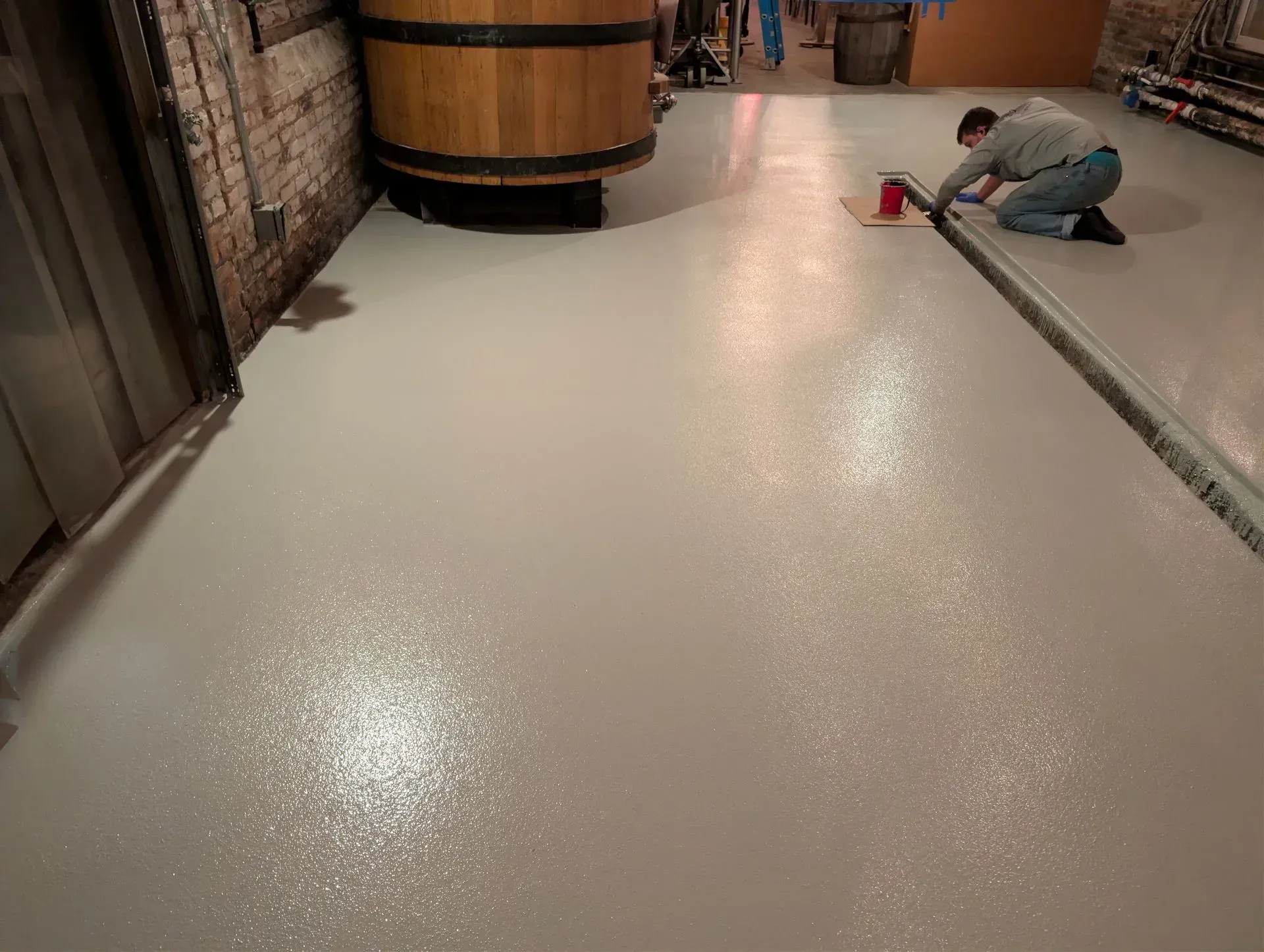
Full epoxy or epoxy-urethane hybrid systems resist oil, brake fluid, and solvents far better than single-coat paint-grade products. This matters most directly under lift pads and around parts-washing stations, where chemical exposure is constant rather than occasional.
Impact and Abrasion Resistance
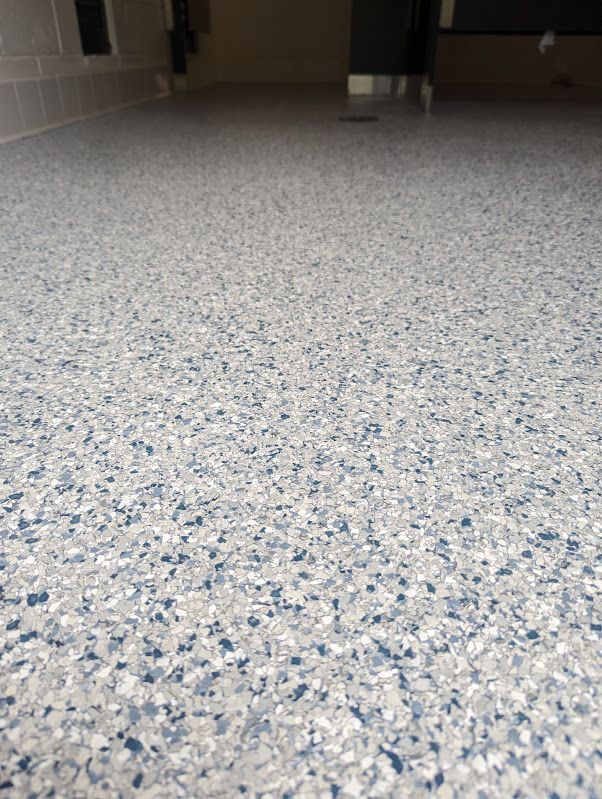
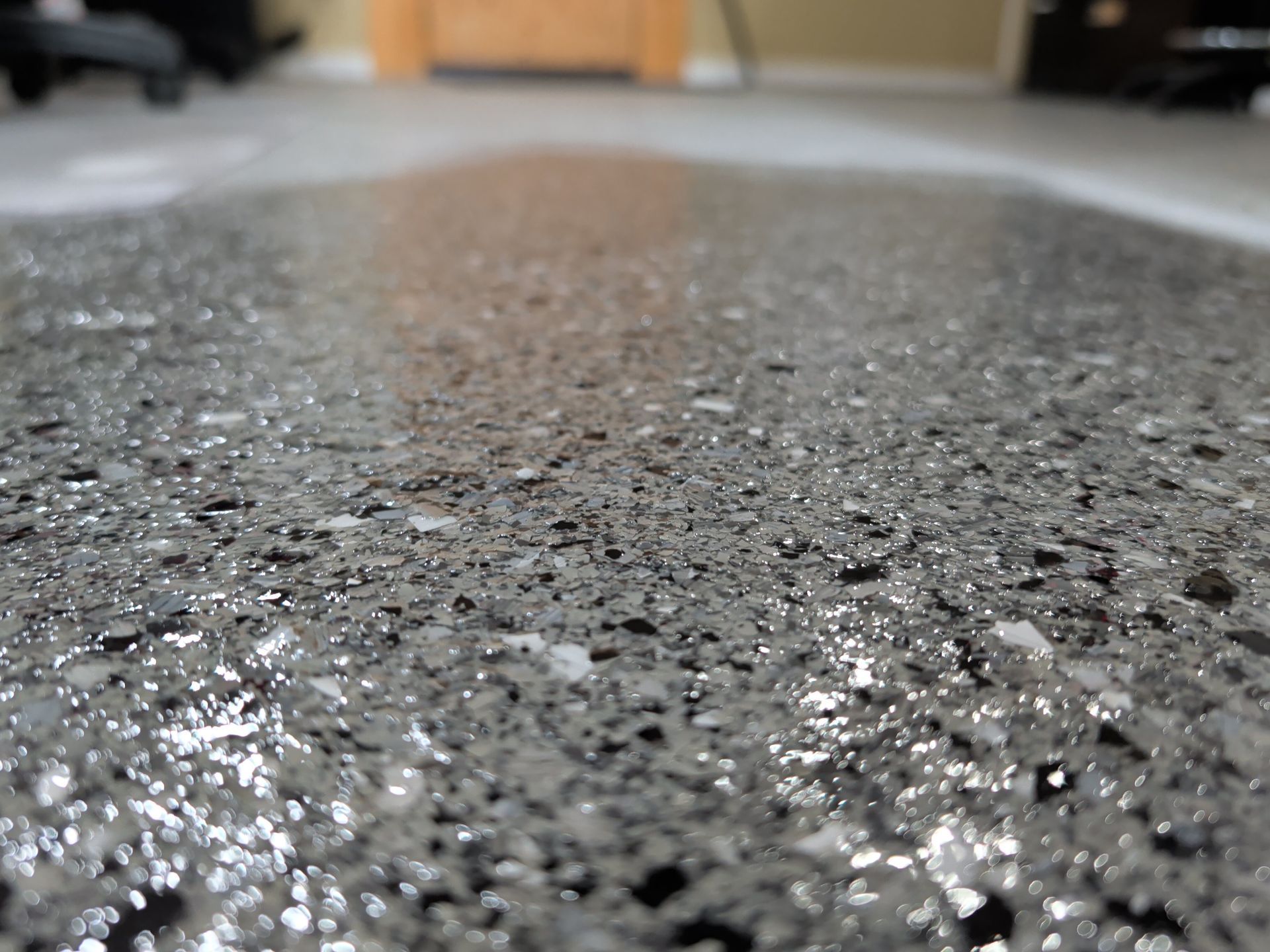
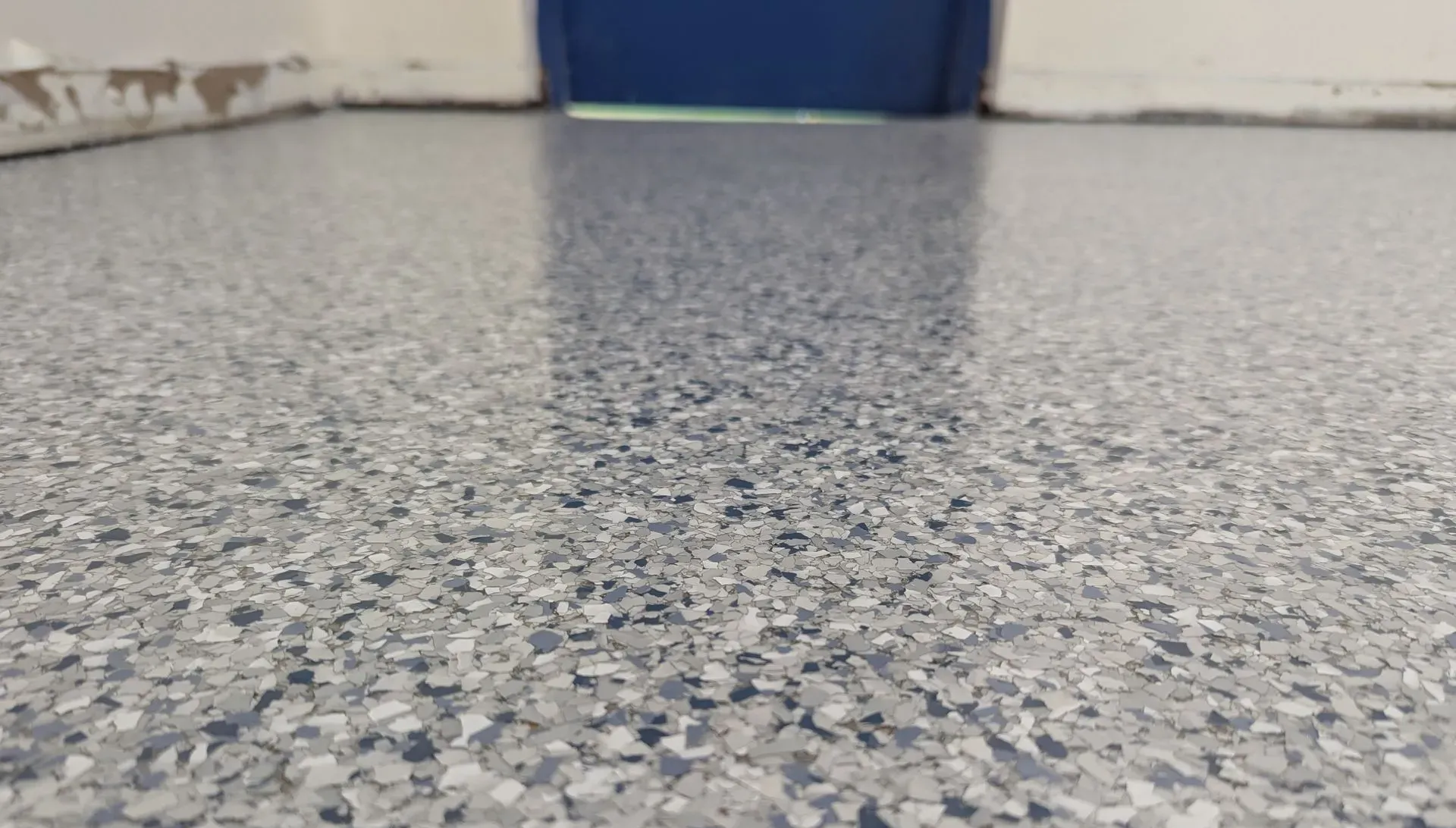
Broadcast systems with aggregate or quartz media hold up to dropped tools and dragged equipment better than a smooth topcoat alone. Thickness matters here — a thin cosmetic coat won't survive point-load impact the way a full-thickness system will.
Hot Tire Pickup Resistance
Standard epoxy can soften under hot tires parked overnight, leading to lifting and marking. Epoxy-urethane hybrid topcoats are formulated specifically to resist this — worth specifying if the shop regularly has vehicles sitting on the same spot.
Slip Resistance
Shops deal with oil on the floor more than almost any other commercial environment. A slip-resistant additive in the topcoat isn't optional here — it's a basic safety requirement.
Drain and Layout Considerations
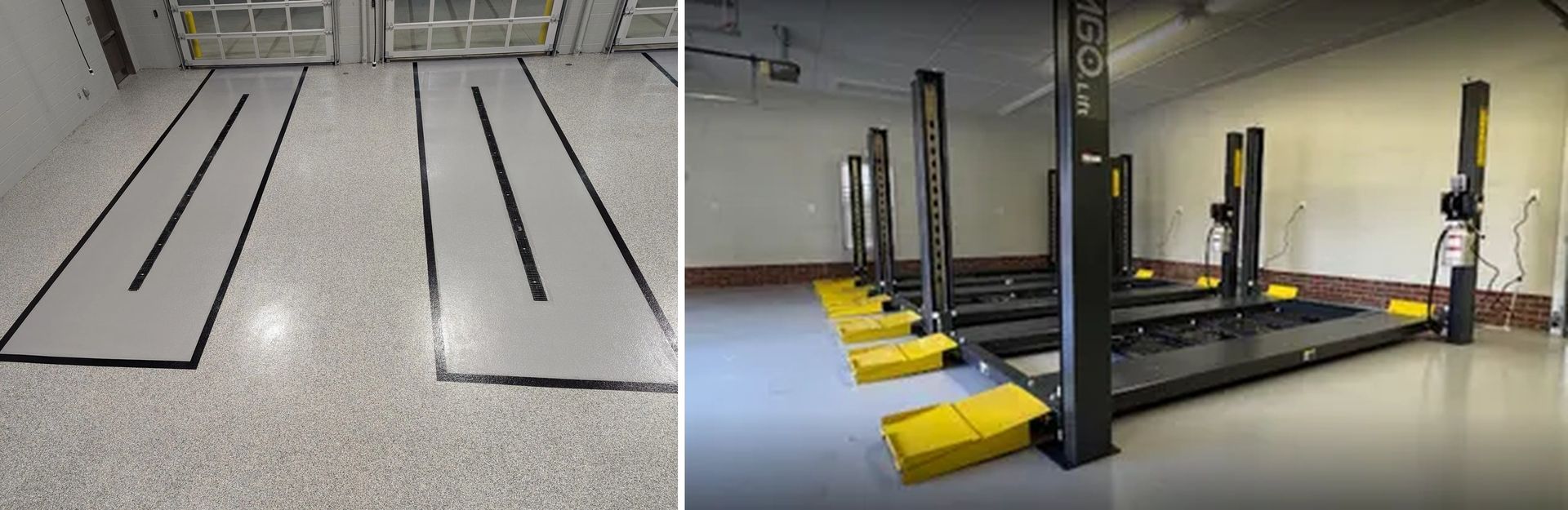
Floor coatings around drains, trench drains, and lift pits need special attention during installation. Coating has to be feathered and sealed properly at these transitions, or you end up with an edge where the coating lifts first. If your shop has an existing drainage issue, that needs to be addressed before coating goes down — sealing over a floor that holds standing fluid accelerates coating failure regardless of the product used.
What to Ask Before You Hire Someone for a Shop Floor
- Is the system rated for commercial/industrial use, or is it a residential garage product?
- What's the total system thickness, and does it include a broadcast or aggregate layer for impact resistance?
- Is the topcoat rated for hot tire pickup resistance?
- How is the floor prepped — ground, shot-blasted, or just cleaned? Proper prep is what makes the coating bond in the first place.
- What's the plan for drains, lift pads, and any existing cracks or damage in the slab before coating starts?
How Blastek Approaches Auto Shop and Mechanic Floors
We install commercial-grade floor coatings across Spartanburg, Boiling Springs, Greer, and the Upstate that are specified for the actual conditions of the space — not a one-size-fits-all residential product. For a working shop, that means chemical resistance, impact-rated broadcast systems, and proper prep and sealing around drains and lift pads from the start.
Get a Free Estimate for Your Shop Floor
Give Toby a call at (864) 266-8841 or reach out through our contact page. We'll walk your shop and spec a system built for the way the floor actually gets used.